Hire a Swift developer who writes safe, modern Swift your team can build on
When a role asks for a Swift developer rather than an iOS developer, the team usually cares most about the code underneath the screens: structured concurrency, clean protocols and generics, memory that does not leak, and modules that test well. Those skills show only in real code, so the way to compare candidates is to see each one change a Swift codebase before anyone schedules an interview.
What the hiring manager needs from a Swift developer
Teams that title the role this way often have a large Swift codebase shared across apps, a Swift package used by several targets, or Swift running on the server. The tech lead needs someone who moves that codebase toward strict concurrency without breaking it, and whose types and APIs make the next change easier rather than harder.
Moving callbacks to async/await
A networking layer built on completion handlers and Combine has to move to async/await. A capable Swift developer converts it piece by piece, keeps cancellation working, and stops blocking the main actor with work that belongs elsewhere.
Data races flagged by strict concurrency
Turning on the Swift 6 language mode produces a wall of Sendable warnings. The developer decides which types should be actors, which should be value types, and which genuinely need a lock, instead of silencing the compiler with unchecked conformances.
A view controller that never deallocates
Memory climbs each time a screen opens and closes. The developer finds the closure that captures self strongly or the delegate held by a strong reference, fixes the retain cycle, and confirms it in the memory graph.
A shared module other teams depend on
A Swift package for payments or analytics is used by several apps. Designing protocols with sensible defaults, keeping the public surface small, and versioning changes so other teams are not broken is part of this role.
Where hiring a Swift developer usually goes wrong
- Hiring on years of app work alone
- A long list of shipped apps can come from assembling screens with third-party libraries. It does not tell you whether the candidate can reason about actors, value semantics or generics when the codebase needs it.
- Asking definitions instead of reading code
- Most candidates can explain what an actor is. Far fewer can look at a class shared across tasks and say where the race is, which is the skill a strict concurrency migration depends on.
- Overlooking tests and API design
- Swift's type system can make wrong states impossible to write, or it can be bent around with force unwraps and Any. Seeing how a candidate models data and writes tests tells you which kind of codebase you will have in a year.
Real tasks from a Gateway assessment
These come from a Gateway assessment for a frontend developer, with the employer’s name taken out. Gateway writes every assessment from your own job description, so the tasks your candidates get are built around your role.
Code, then a short note
Search that survives slow responses
Buyers on slow mobile connections type fast, and search responses come back out of order. An older response sometimes overwrites newer results, and a failed request looks the same as “no results”.
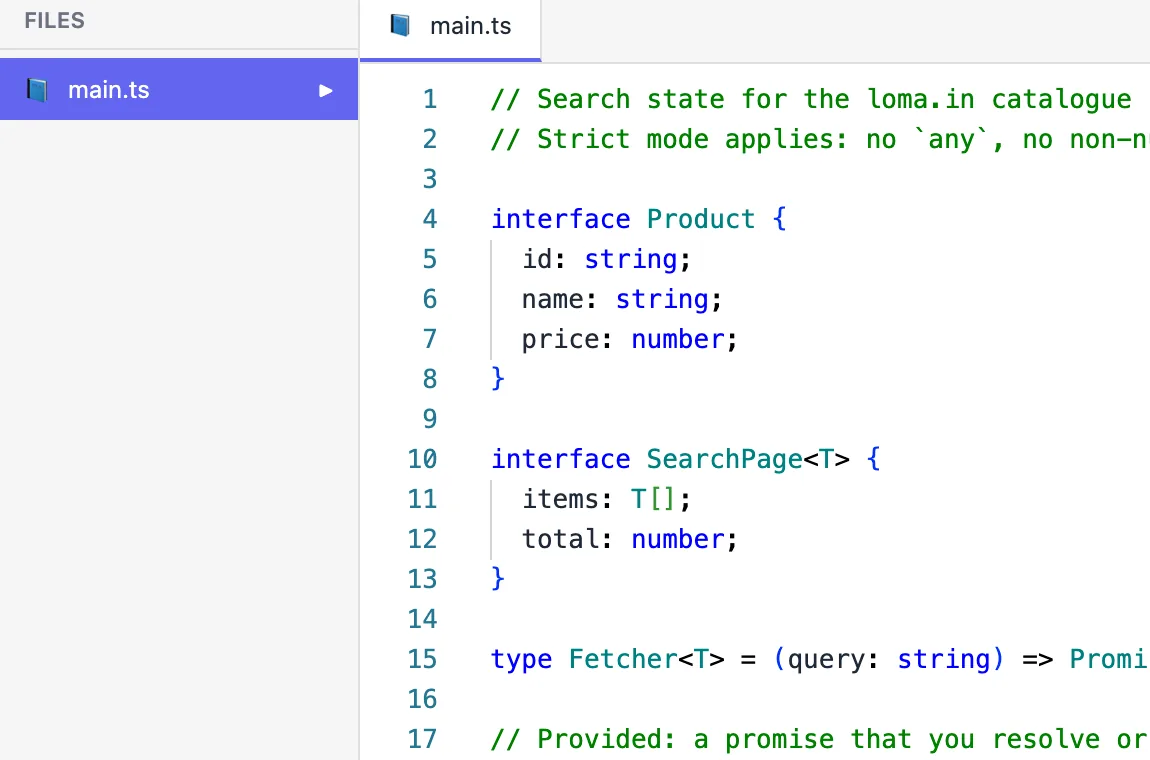
What a strong candidate did: Kept only the latest request’s results, gave loading, empty and error their own states with a retry, and wrote tests that reproduce the out-of-order case.
Web code in the browser
Accessible, responsive filter chips
A designer’s new filter panel works with a mouse on desktop. Nobody has checked it with a keyboard, a screen reader or a phone. The candidate is asked to finish it.
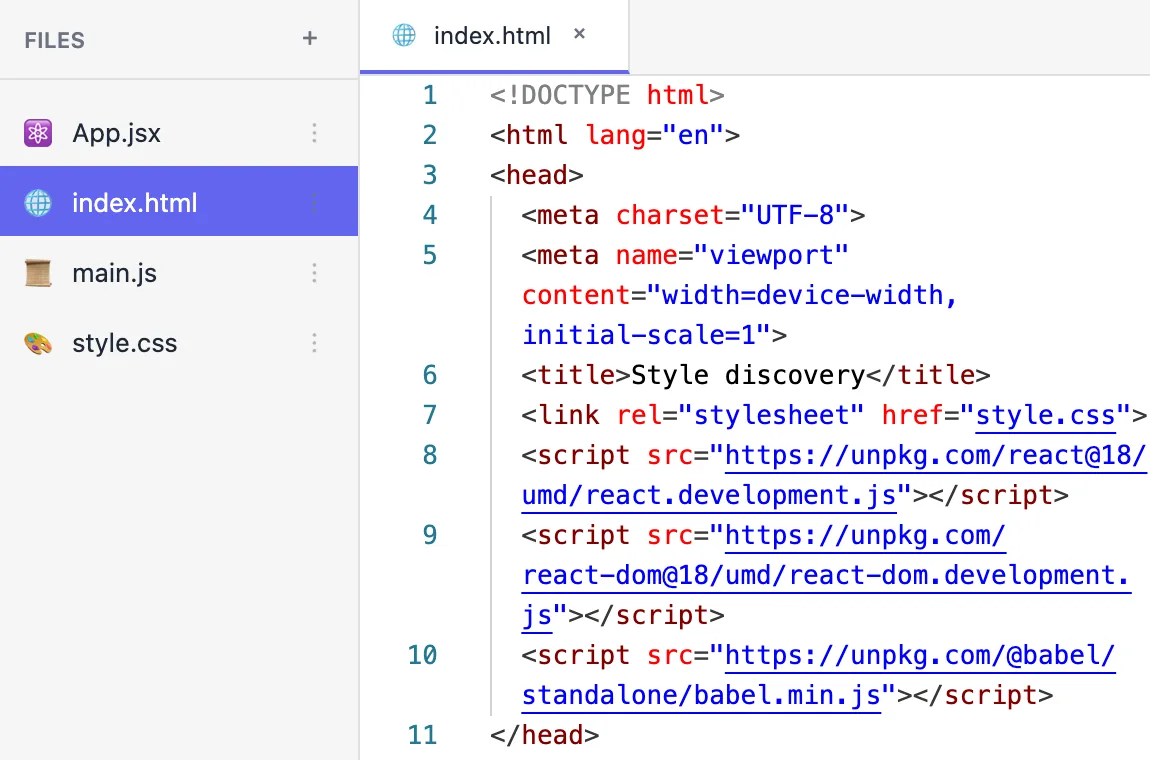
What a strong candidate did: Made every chip reachable and toggleable from the keyboard with a visible focus, announced the selected state to screen readers, and made the panel usable on a small phone without changing the design.
Web code in the browser, then a short note
Fix the slow, jumpy catalog grid
Field data for the catalog page on mobile shows the main image loading in 3.8 seconds and the layout jumping as it loads. Product and the founder want it back inside Google’s “good” thresholds. The candidate owns the frontend.
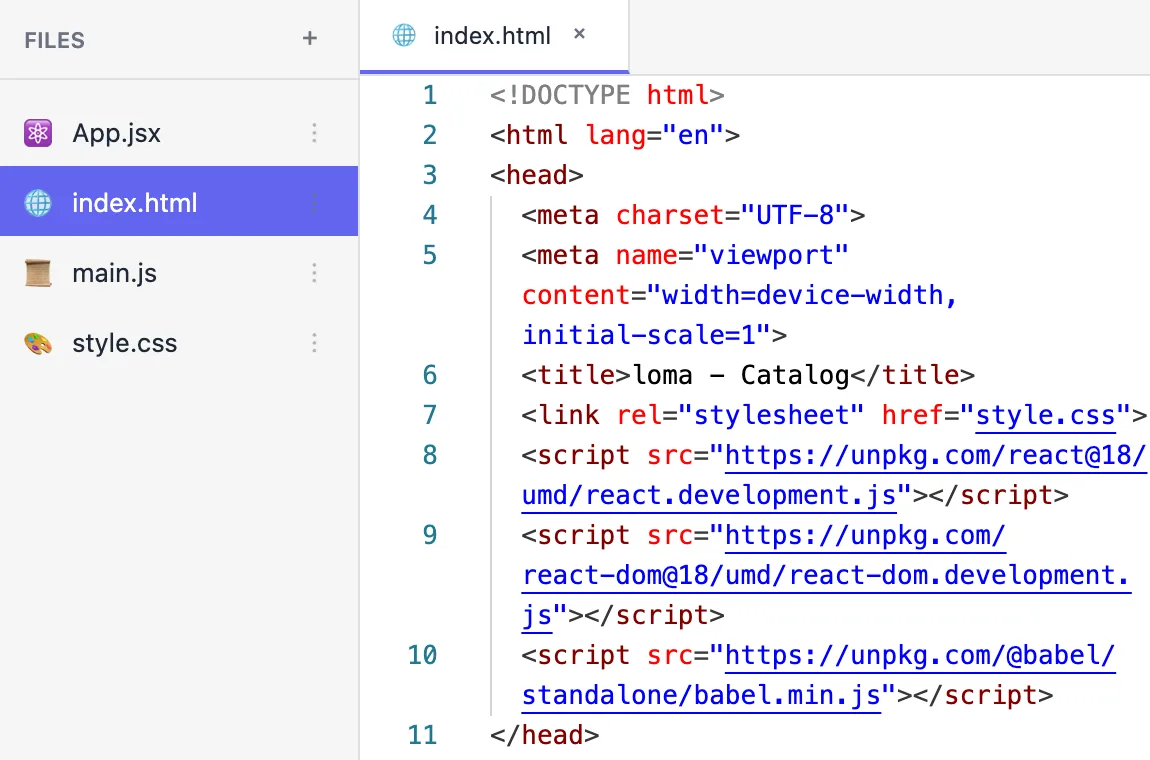
What a strong candidate did: Reserved space for images so nothing moves, loaded the first visible image first and the rest lazily, and explained which change moved which number and how to confirm it in field data next week.
How the decision gets made
In Gateway, each Swift developer candidate works on situations from your job description: a callback API to move to async/await, a class with a data race, a retain cycle to find, or a package interface to design. The work happens in Swift code with a short written note on the trade-offs. Your tech lead sees every skill scored with written feedback, opens the code read-only, and spends interview time only on the developers whose Swift reads as if it was written for the next maintainer.
See your next Swift developer at work before you meet them
Paste your job description and Gateway writes the assessment in about 5 to 10 minutes. Your team can edit every question before it goes out.
Questions
Our Swift work is on the server, not on iPhone. Does that work?
Yes. The assessment is written from your job description, so a server-side Swift role gets server-side tasks. Your team can edit any question before sending.
Can we focus the assessment on concurrency?
You can. Edit the generated tasks so the situations centre on async/await, actors and Sendable. Each skill is scored separately, so concurrency stands on its own in the results.
How is this different from an online Swift quiz?
There is no multiple choice and no question bank circulating online. The candidate writes real code against a situation from your role, and you can read every line.
Can we include candidates who come from other languages?
Send the same link to anyone. A strong Kotlin or C# developer shows clearly which skills already carry over to Swift and which are still developing.
Related