Hire an analytics engineer who turns raw tables into models every analyst can trust
An analytics engineer builds the tested, documented models that sit between raw loaded data and every dashboard and analysis, usually in dbt and version control, so that business logic lives in one reviewed place. A dbt badge or a list of warehouses does not show that, so the way to compare candidates is to see each one find and fix a model that produces wrong totals before your team spends time on interviews.
What the hiring manager needs from an analytics engineer
The head of data hiring an analytics engineer usually has analysts copying the same SQL into many reports, each with small differences, and a data engineering team that loads data but does not own its meaning. The manager needs someone who owns the modelled layer: correct grain, shared logic, tests that run on every change, and documentation people read.
A join at the wrong grain inflating spend
A campaign table joined to a daily table repeats each campaign's spend on every day row, and the sum no longer ties to billing. A strong analytics engineer states the grain of every model, fixes the join, and adds a test that compares the total with the source so the problem cannot return quietly.
A model change that silently moved a downstream metric
Someone edited a staging model and a revenue figure in the board pack shifted. The analytics engineer reads the lineage, finds every model and dashboard downstream, and puts a review and test step in place so changes show their impact before merging.
The same business logic written ten different ways
Refund handling, currency conversion and active-user rules are repeated across dozens of models. The engineer pulls each into one shared model, migrates consumers one at a time, and checks that their numbers match before and after.
Turning an analyst's one-off query into a maintained model
An analysis everyone now depends on still runs from a personal script. The engineer rewrites it as a modelled table with tests, documentation and an owner, and agrees with the analyst what each column means.
Where hiring an analytics engineer usually goes wrong
- Hiring on a dbt certificate
- Knowing the commands and folder layout is quick to learn. Choosing the grain of a model, writing tests that catch real errors and refactoring without changing results are what the certificate does not cover.
- Hiring an analyst who has never used version control
- Strong reporting SQL is a good start. An analytics engineer also works through pull requests, code review and automated tests, and a candidate new to that workflow can slow the whole team.
- Hiring a pipeline engineer who avoids business definitions
- The role sits next to finance and product, agreeing what a customer or an order means. A candidate who only wants to move data will leave the definitions to analysts, which is the problem you hired to solve.
- SQL puzzles instead of modelling problems
- Window-function brainteasers test cleverness on toy tables. They do not show whether a candidate notices that a model's grain changed between two versions of a query.
Real tasks from a Gateway assessment
These come from a Gateway assessment for a data engineer, with the employer’s name taken out. Gateway writes every assessment from your own job description, so the tasks your candidates get are built around your role.
SQL, then a written note
Inflated spend in a feature table
A strategist summed ad spend from the feature table behind an automated ads optimizer and found it far above the billing report for the same days. A data scientist trains a model on the same table.
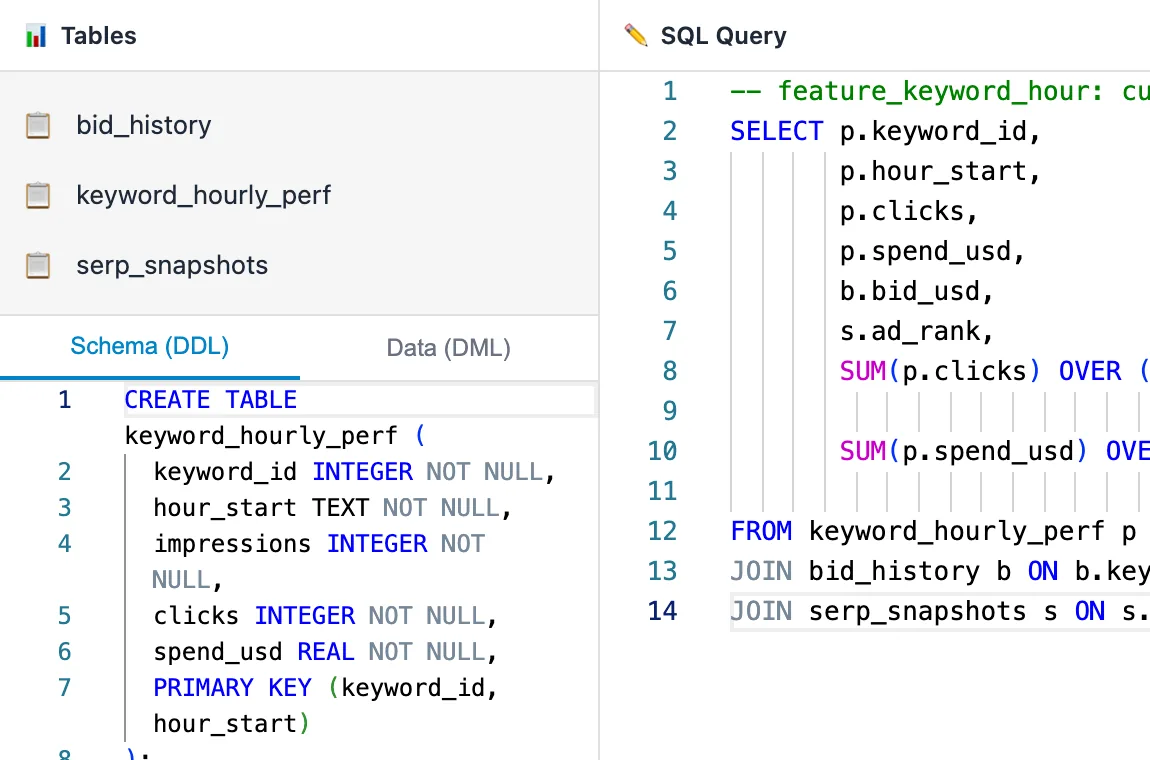
What a strong candidate did: Found the join that multiplied spend, fixed the query so totals tie to billing, and told the data scientist which training days were affected.
Code, then a short note
Gate and deduplicate outbound bid changes
A pipeline pushes bid and budget changes to an ads API every 15 minutes. A rerun pushed the same edits twice, and a broken join once sent zero bids live. The strategist also wants good edits to go through when one bad edit is stopped.
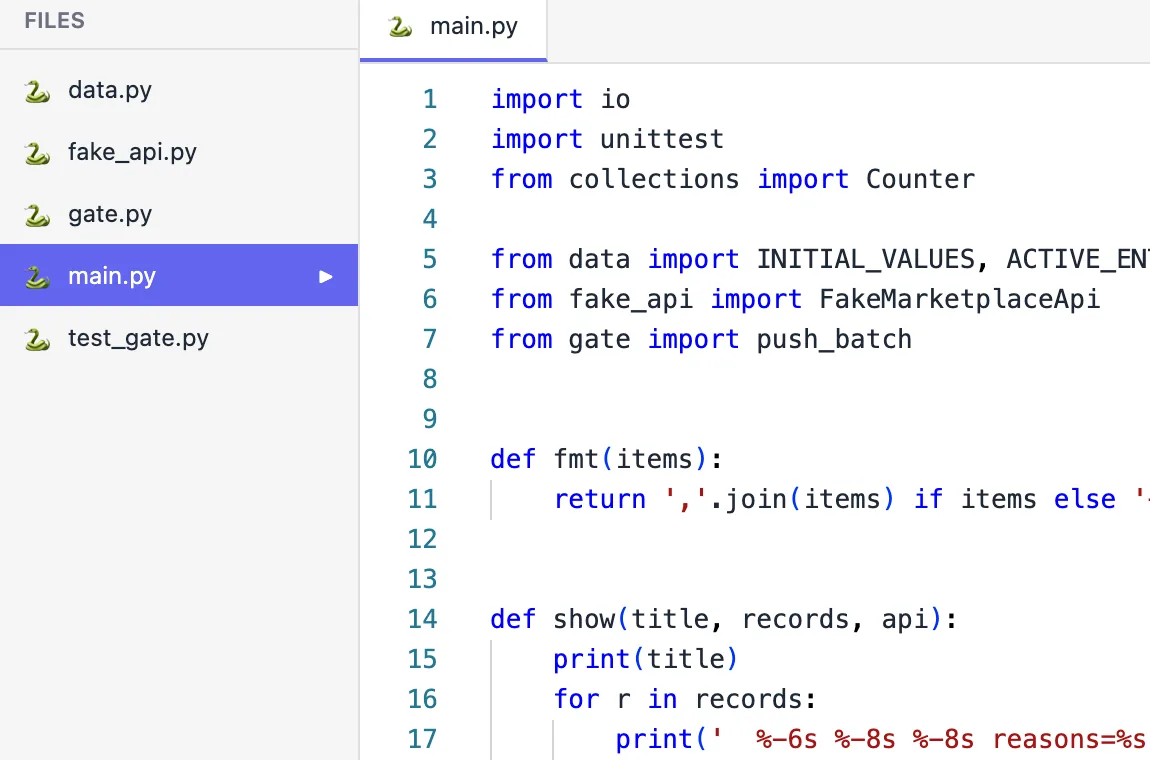
What a strong candidate did: Made each push safe to rerun, stopped bad values one edit at a time instead of the whole batch, and logged what was held and why.
SQL, then a short update
Why did model error jump after the overnight run
Error in the latest model metrics is far higher than last week. The data scientist cannot yet say whether the models got worse or the data feeding them did, and the engineering manager needs an answer before the morning.
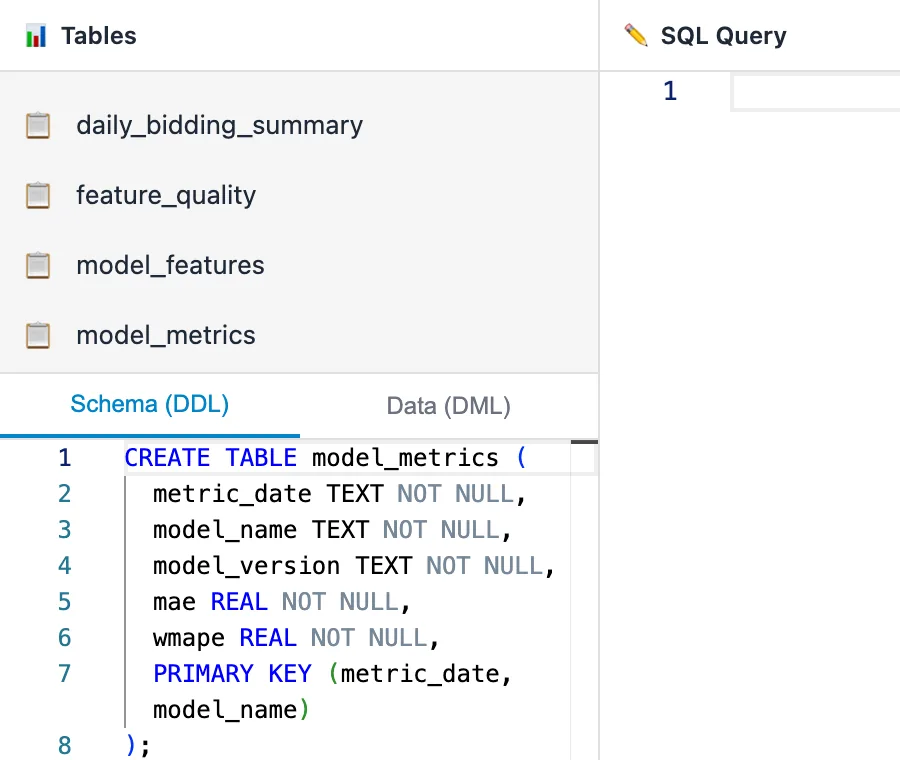
What a strong candidate did: Showed from the data that an upstream feed changed, not the models, pointed to the rows and the time it started, and wrote the update in words the manager could act on.
How the decision gets made
In Gateway, each analytics engineer candidate works through situations written from your job description: a feature table whose spend does not tie to billing, a push that must be safe to rerun, a metric that jumped after an overnight build. The candidate works in SQL and code and writes a short note for the analysts and data scientists who use the tables. The head of data sees each skill scored with written feedback, opens the queries read-only, and meets only the engineers who fixed the model at its cause.
See your next analytics engineer at work before you meet them
Paste your job description and Gateway writes the assessment in about 5 to 10 minutes. Your team can edit every question before it goes out.
Questions
Can the assessment follow our modelling setup, for example dbt on a cloud warehouse?
Gateway writes each assessment from your job description, so the situations follow the tools and conventions the role mentions. Your team can read and edit every question before sending it.
How is this different from hiring a data engineer or a data analyst?
The situations follow the job description. An analytics engineer role gets problems in the modelled layer, such as grain, shared logic and tests, rather than ingestion or open business questions.
Can we see how the candidate explained the fix to analysts?
Yes. The written note opens read-only beside the SQL, with a score and written feedback for each skill. Your team can change any score and makes the final decision.
How quickly can we send it?
An assessment takes about 5 to 10 minutes to set up from a job description. Each candidate gets one link and a deadline and needs only a laptop or desktop.
Is there a risk candidates have seen the questions before?
Each assessment is written from your own job description, with no multiple choice and no question bank that circulates online.
Related