Hire a MySQL developer who keeps InnoDB fast under real traffic
A MySQL developer is hired to keep the application's queries, schema and data on InnoDB correct and quick, including when replicas lag, tables grow and changes must ship without downtime. Resumes rarely show who understands indexes, deadlocks and online schema changes, so the way to compare candidates is to watch each one handle a real MySQL problem before your team interviews anyone.
What the hiring manager needs from a MySQL developer
MySQL often sits under a product that started small and grew fast: an e-commerce catalog, a ledger, a booking system. The lead hiring a MySQL developer needs someone who can keep that database responsive at higher traffic and change it safely while customers are using it.
Altering a large table without downtime
A column needs a new type on a table that serves every checkout. The MySQL developer checks whether the change can run as an online DDL in place, or uses a tool such as gh-ost or pt-online-schema-change, and plans the cutover and rollback.
Deadlocks after a new feature
Since a release, the error log shows deadlocks between two transactions that update stock and orders. The developer reads the InnoDB status output, finds that the two code paths lock rows in opposite order, and fixes the order or the index each one uses.
Reads that come back stale from a replica
Customers update a profile and see the old version on the next page, because reads go to a replica that is behind. The developer decides which reads must go to the primary, and looks at why replication fell behind in the first place.
The slow query log fills up
Slow queries spike every afternoon. The developer groups them by pattern, finds the composite index whose column order does not match the WHERE clause, and checks that a new index will not slow down the heavy write path.
Where hiring a MySQL developer usually goes wrong
- Assuming any SQL experience transfers
- MySQL has its own behaviour: gap locks under REPEATABLE READ, implicit type conversion that skips an index, utf8 that is not full UTF-8. A strong SQL generalist can still trip on each of these in the first month.
- Never testing a live schema change
- An ALTER that works on a laptop can block a production table for a long time. If the candidate is never asked how a change will run on a large busy table, you only find out on release day.
- Missing what the candidate does with a replica
- Replication is part of almost every MySQL setup. A candidate who sends all reads to replicas without thinking about lag creates bugs that look random to customers and support.
- Interviewing on recall, not diagnosis
- Asking about storage engines and isolation levels in the abstract rewards memory. Handing the candidate a deadlock trace or a slow log extract shows who can actually find the fault.
Real tasks from a Gateway assessment
These come from a Gateway assessment for a data engineer, with the employer’s name taken out. Gateway writes every assessment from your own job description, so the tasks your candidates get are built around your role.
SQL, then a written note
Inflated spend in a feature table
A strategist summed ad spend from the feature table behind an automated ads optimizer and found it far above the billing report for the same days. A data scientist trains a model on the same table.
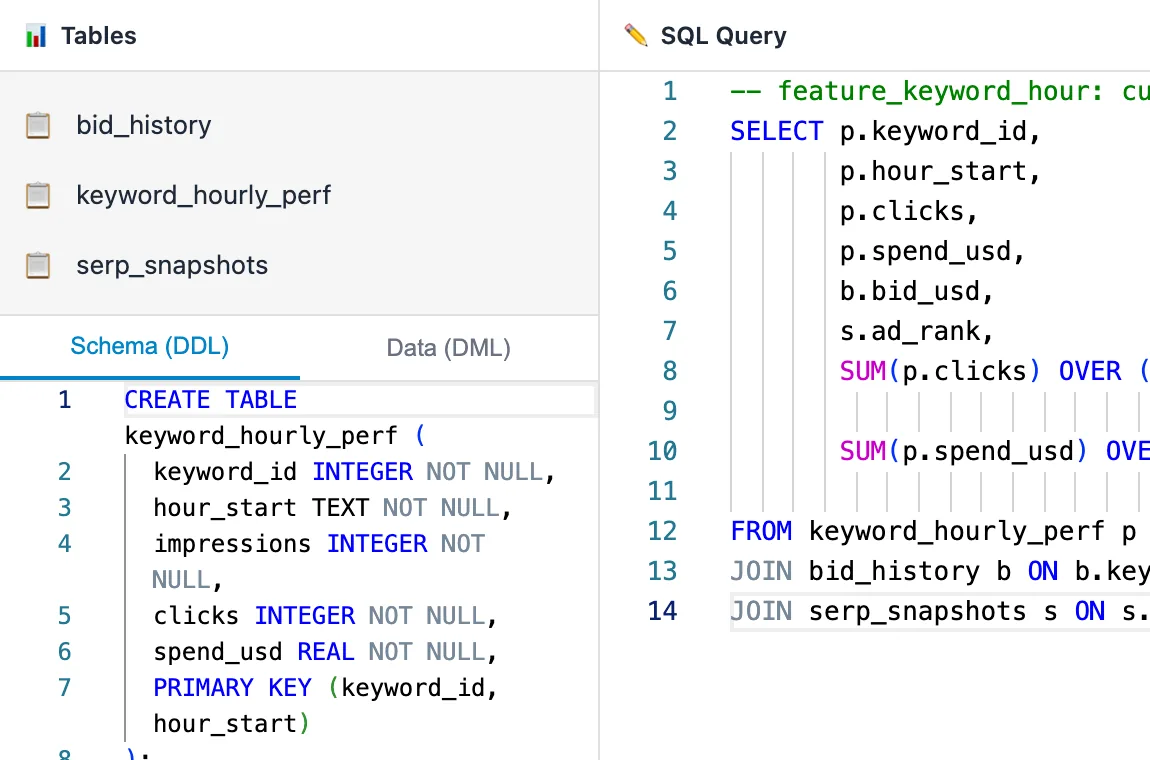
What a strong candidate did: Found the join that multiplied spend, fixed the query so totals tie to billing, and told the data scientist which training days were affected.
SQL, then a short update
Why did model error jump after the overnight run
Error in the latest model metrics is far higher than last week. The data scientist cannot yet say whether the models got worse or the data feeding them did, and the engineering manager needs an answer before the morning.
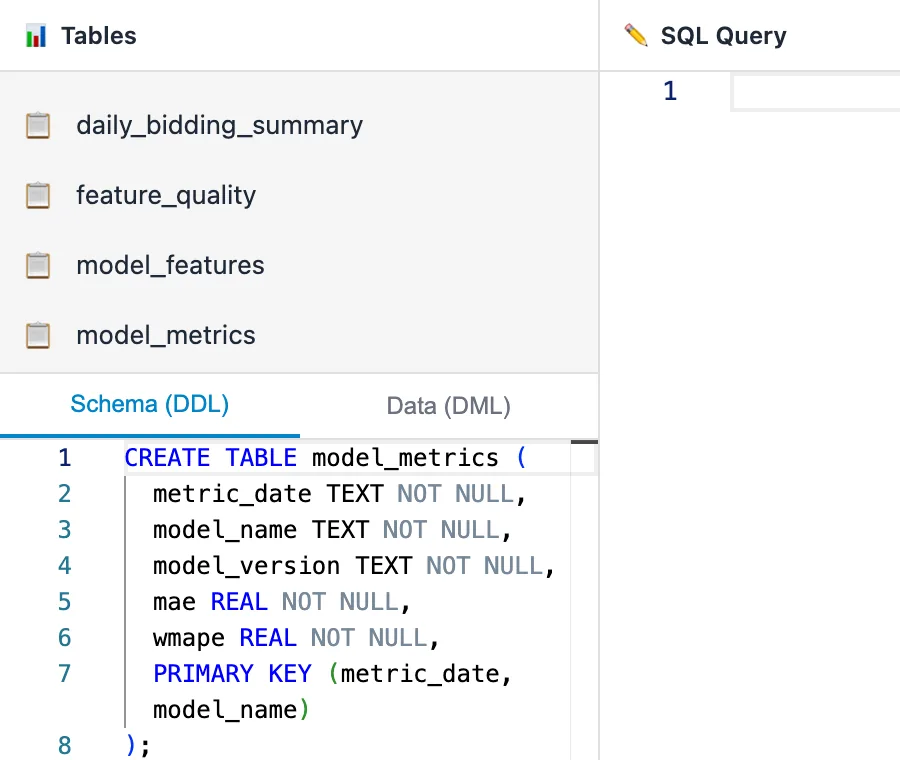
What a strong candidate did: Showed from the data that an upstream feed changed, not the models, pointed to the rows and the time it started, and wrote the update in words the manager could act on.
Code, then a short note
Gate and deduplicate outbound bid changes
A pipeline pushes bid and budget changes to an ads API every 15 minutes. A rerun pushed the same edits twice, and a broken join once sent zero bids live. The strategist also wants good edits to go through when one bad edit is stopped.
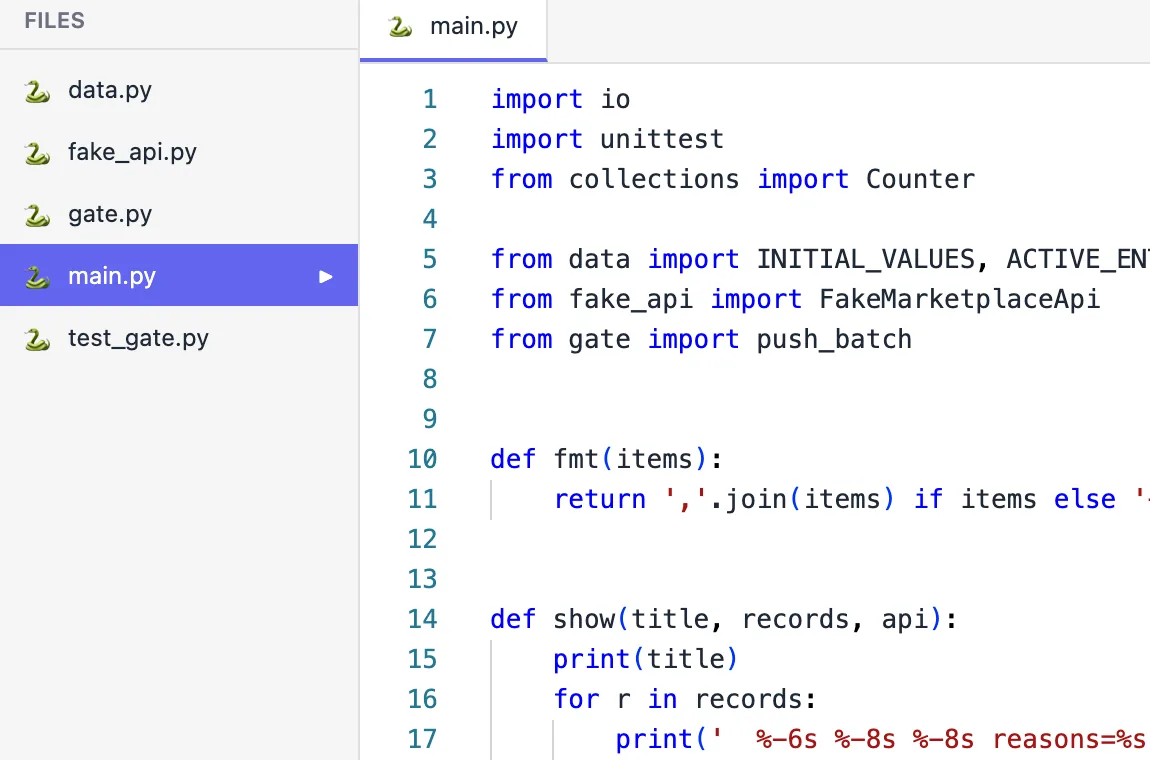
What a strong candidate did: Made each push safe to rerun, stopped bad values one edit at a time instead of the whole batch, and logged what was held and why.
How the decision gets made
In Gateway, MySQL developer candidates work through situations built from your job description: a total that is wrong because of a join, a nightly batch that duplicated rows, a failing push that must be made safe to repeat. Candidates write SQL in the workspace and code where needed, and explain the fix in a short note for your team. The hiring manager sees scores and written feedback for each skill, opens the work read-only, and meets only those who handled the MySQL specifics correctly.
See your next MySQL developer at work before you meet them
Paste your job description and Gateway writes the assessment in about 5 to 10 minutes. Your team can edit every question before it goes out.
Questions
Can the test include our replication or sharding setup?
Yes. Describe it in the job description or edit the generated situations before sending. Your team reads every question first and can rewrite any of them.
Does the assessment check performance or only correct results?
Both, if your role needs both. Situations can ask for a correct query and an explanation of how it will use indexes, and each skill is scored separately with written feedback.
We hire several MySQL developers a year. Can we reuse an assessment?
You can send the same assessment to each new batch. Candidates are added from a spreadsheet, an ATS export or resumes, and each gets one link and a deadline.
What do candidates see before they start?
Each step says what it involves, for example SQL or a written note, before the candidate accepts it. A laptop or desktop and the link are all that is needed.
Related