Hire a data analyst whose numbers you can act on
A data analyst is worth hiring when the people who read the analyst's work can make a decision from it without checking every number again. Tool lists look the same on every resume, so the clearest signal is how a candidate handles a real question with messy data, before anyone spends time on interviews.
What the hiring manager needs from a data analyst
The manager hiring an analyst usually has a decision waiting on an answer: which customers to chase, why a metric moved, whether a campaign earned its spend. The manager needs someone who gets to a number that holds up, explains it in plain words, and says how certain the answer is.
A number that does not match another report
Finance's total and the dashboard's total disagree. A strong analyst finds the join that double counts or the filter that drops rows, and fixes the query, instead of picking whichever figure looks more reasonable.
A metric moved and leadership wants to know why
Revenue per customer fell last week. The analyst separates a real change in behaviour from a data problem, a holiday or a change in the mix of customers, and says which one it is before anyone acts.
A question asked in business words
"Which accounts are at risk?" has no column in any table. The analyst turns it into something measurable, agrees the definition with the person asking, and states what the data cannot answer.
A finding that has to change someone's mind
The work is only useful if the sales head or the operations manager reads it and acts. A short note with the answer first and one clear chart does more than a twenty-tab workbook.
Where hiring a data analyst usually goes wrong
- Hiring on SQL, Python and Tableau
- Nearly every applicant lists the same three tools. Knowing the syntax says little about whether someone notices that a total is twice what billing reports, which is the moment an analyst either earns a place on the team or costs the business a bad decision.
- Testing with clean, textbook data
- Real company data has duplicates, late-arriving rows and fields that changed meaning last quarter. A test built on a tidy sample shows who can write a query, not who can be trusted with yours.
- Rewarding the busiest dashboard
- Candidates who show many charts can look thorough. The manager needed one answer to one question; an analyst who cannot say what matters is hard to work with, however many visuals the analyst builds.
- Never checking how uncertainty gets explained
- An analyst who presents every number with the same confidence will eventually lead a team into a mistake. How a candidate says "this part I am not sure of" is as important as the query itself.
Real tasks from a Gateway assessment
These come from a Gateway assessment for a data engineer, with the employer’s name taken out. Gateway writes every assessment from your own job description, so the tasks your candidates get are built around your role.
SQL, then a written note
Inflated spend in a feature table
A strategist summed ad spend from the feature table behind an automated ads optimizer and found it far above the billing report for the same days. A data scientist trains a model on the same table.
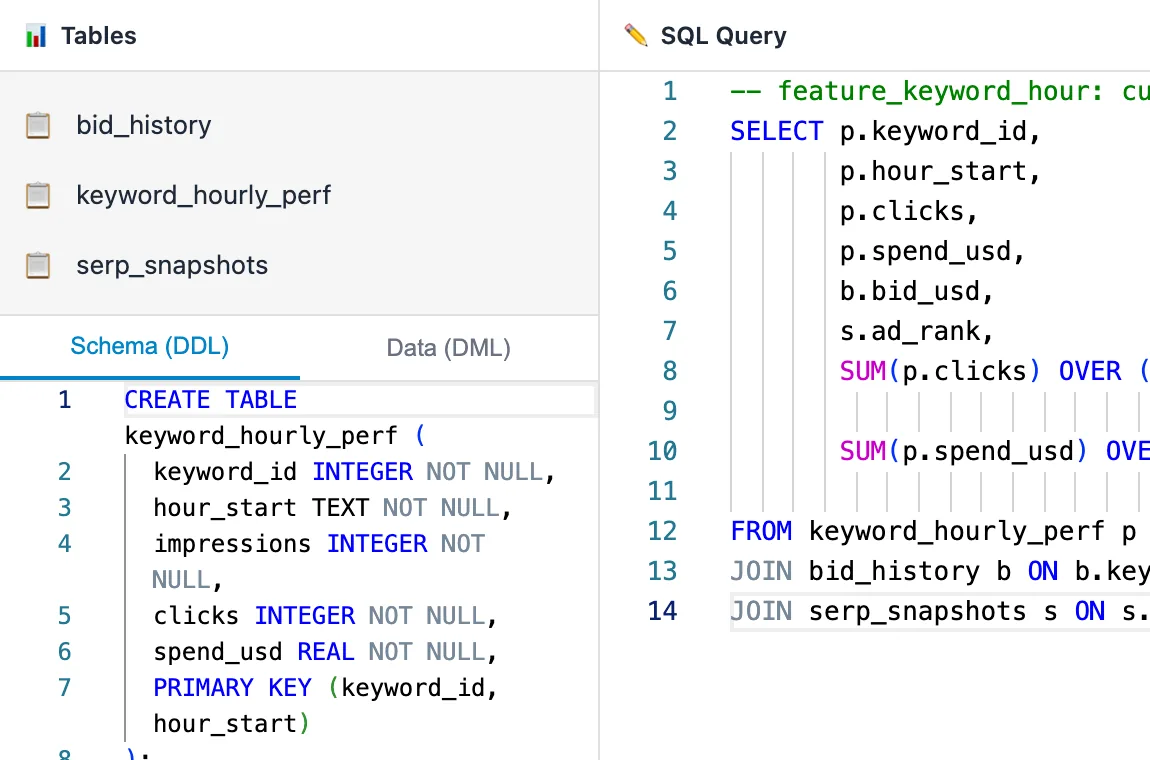
What a strong candidate did: Found the join that multiplied spend, fixed the query so totals tie to billing, and told the data scientist which training days were affected.
SQL, then a short update
Why did model error jump after the overnight run
Error in the latest model metrics is far higher than last week. The data scientist cannot yet say whether the models got worse or the data feeding them did, and the engineering manager needs an answer before the morning.
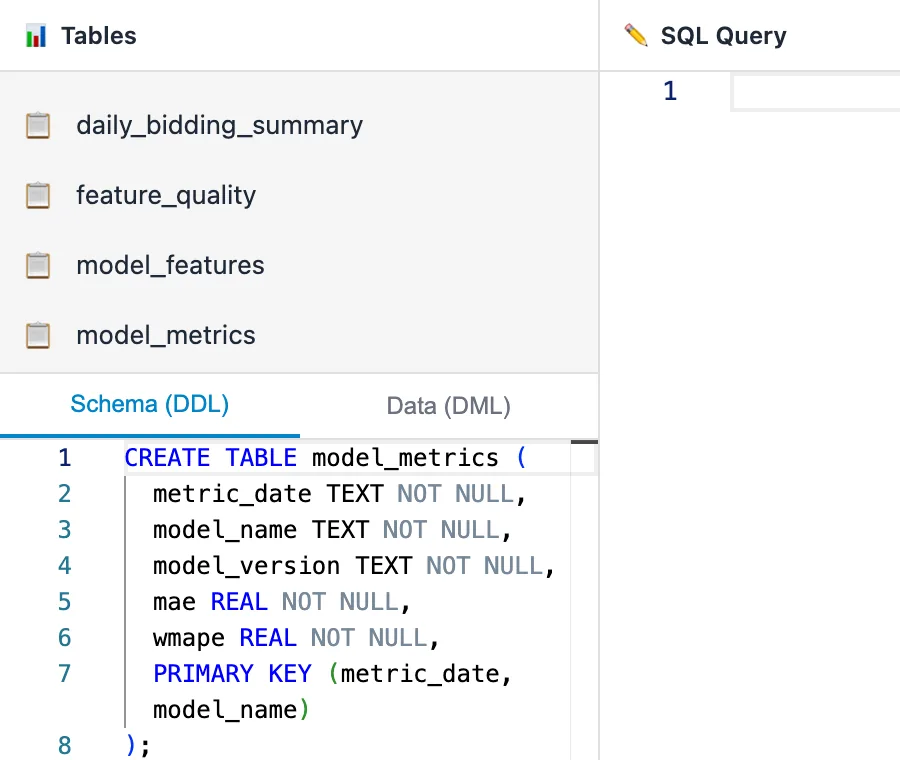
What a strong candidate did: Showed from the data that an upstream feed changed, not the models, pointed to the rows and the time it started, and wrote the update in words the manager could act on.
How the decision gets made
In Gateway, each data analyst candidate works on situations written from your job description: a query that does not tie to another report, a metric that moved, a question from a manager in plain words. The work happens in SQL, a spreadsheet and a short written note, the way the job is done. The hiring manager sees each skill scored with its reason and can open the candidate's queries and write-up, then meets only the analysts whose answers held up.
See your next data analyst at work before you meet them
Paste your job description and Gateway writes the assessment in about 5 to 10 minutes. Your team can edit every question before it goes out.
Questions
Can the assessment use data like ours?
Gateway writes each assessment from your job description, so the situations and data follow your industry and the questions your analyst will be asked. Your team can edit every question and its data before sending.
Does it test SQL, Excel or both?
Whatever the role needs. Candidates can work in SQL, a spreadsheet, a document or slides within one assessment, so you see the query and the explanation together.
How do we see how a candidate reached an answer?
Every answer opens read-only in the same tool the candidate used, next to a score and written feedback for each skill. Your team can change any score.
We hire analysts in batches. Does this work for many candidates at once?
Yes. Add candidates from a spreadsheet, your ATS export or resumes, and each gets one link and a deadline. You shortlist the people above the line you set.
Related