Hire a data engineer whose pipelines can be rerun without breaking anything
A data engineer is worth the seat when every downstream team can trust that yesterday's data arrived once, complete and on time, and when a failed run can simply be run again. Spark, Kafka and Airflow appear on most applications, so the way to tell candidates apart is to see each one fix a real duplicate or bad-load problem before your team spends time in interviews.
What the hiring manager needs from a data engineer
The data or platform lead hiring a data engineer is usually answering for pipelines that analysts, data scientists and sometimes customers depend on before the working day starts. The lead needs someone who designs every load to survive retries, late files and upstream changes, and who says early when a deadline will be missed.
A rerun that loaded the same day twice
An orchestration job failed halfway, someone restarted it, and now the warehouse holds two copies of the day's orders. A strong data engineer makes loads idempotent, with merge keys or partition overwrites, so that a rerun repairs the data instead of doubling it.
An upstream team renamed a column without telling anyone
A source system changed its schema and the pipeline either crashed overnight or, worse, loaded nulls quietly. The data engineer adds contract checks at the boundary that stop the load with a clear error and tell the owner, rather than letting broken data spread into reports.
Late-arriving events and backfills
Mobile events and partner files arrive days late, so daily partitions are never final. The engineer decides how far back each run reprocesses, how to backfill a month without overloading the warehouse, and how to tell users which figures can still change.
A warehouse bill that keeps climbing
A few dashboards and jobs scan entire tables every hour. The data engineer finds the expensive queries, adds partitioning, clustering or incremental models where they pay off, and shows the saving without changing a single number users see.
Where hiring a data engineer usually goes wrong
- Hiring on big-data tools for ordinary volumes
- Many teams move modest data and still screen for Spark and Kafka. A candidate who has tuned clusters may never have had to make a simple batch load safe to rerun, which is the problem your pipelines actually have.
- Algorithm rounds instead of pipeline problems
- Reversing a tree in an interview tests something the role rarely uses. The work is data modelling, failure handling and SQL that stays correct when inputs misbehave.
- Never asking what happens on failure
- Interviews walk through the happy path of a DAG. The engineer's real value shows on the night a job fails halfway, and a process that never simulates that hires on optimism.
- Confusing a strong SQL analyst with a data engineer
- Writing good reporting queries is part of the role. Owning ingestion, orchestration, schema changes and the morning deadline is the rest of it, and an analyst moving across may not have done that yet.
Real tasks from a Gateway assessment
These come from a Gateway assessment for a data engineer, with the employer’s name taken out. Gateway writes every assessment from your own job description, so the tasks your candidates get are built around your role.
Code, then a short note
Gate and deduplicate outbound bid changes
A pipeline pushes bid and budget changes to an ads API every 15 minutes. A rerun pushed the same edits twice, and a broken join once sent zero bids live. The strategist also wants good edits to go through when one bad edit is stopped.
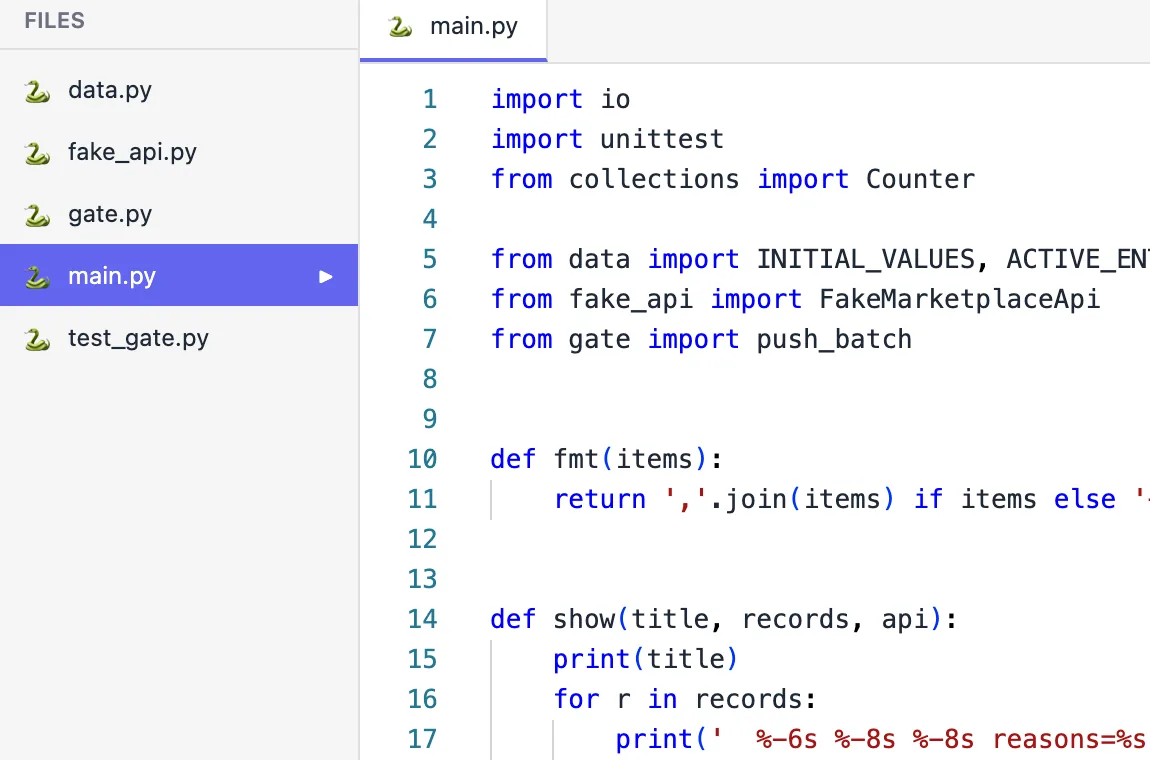
What a strong candidate did: Made each push safe to rerun, stopped bad values one edit at a time instead of the whole batch, and logged what was held and why.
SQL, then a written note
Inflated spend in a feature table
A strategist summed ad spend from the feature table behind an automated ads optimizer and found it far above the billing report for the same days. A data scientist trains a model on the same table.
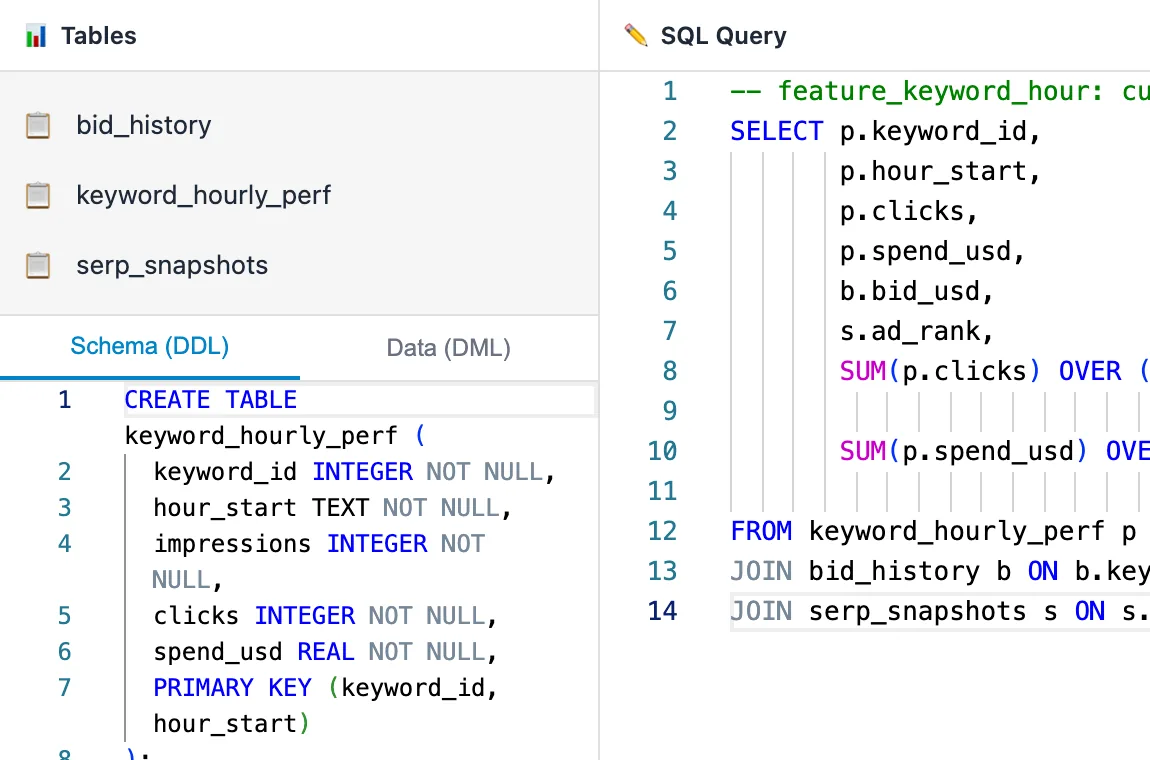
What a strong candidate did: Found the join that multiplied spend, fixed the query so totals tie to billing, and told the data scientist which training days were affected.
SQL, then a short update
Why did model error jump after the overnight run
Error in the latest model metrics is far higher than last week. The data scientist cannot yet say whether the models got worse or the data feeding them did, and the engineering manager needs an answer before the morning.
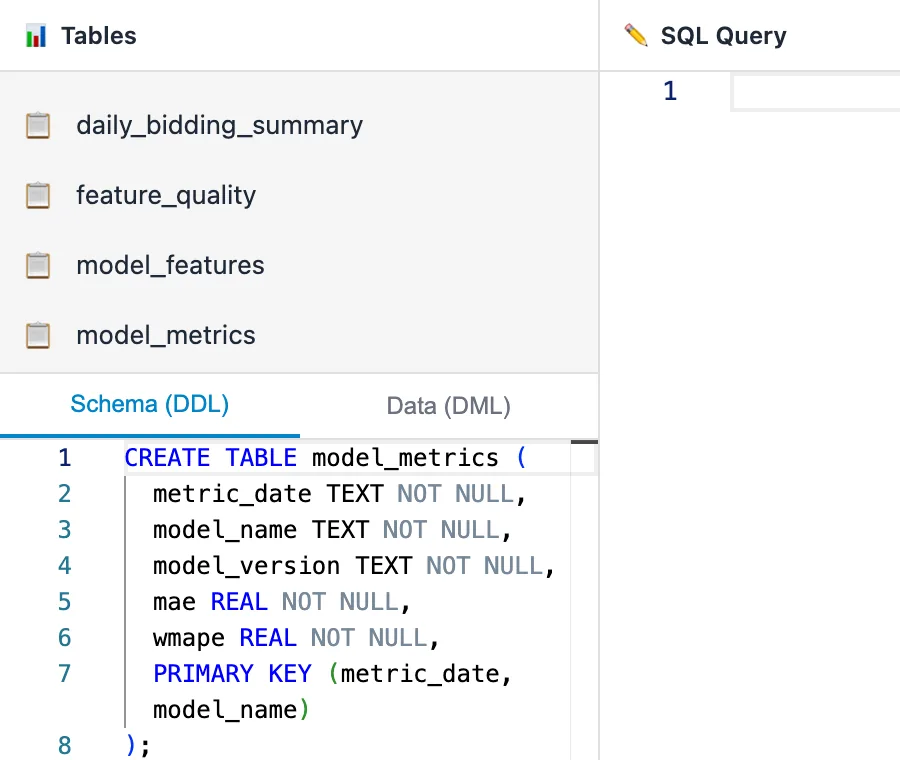
What a strong candidate did: Showed from the data that an upstream feed changed, not the models, pointed to the rows and the time it started, and wrote the update in words the manager could act on.
How the decision gets made
In Gateway, each data engineer candidate works through situations written from your job description: a push to an external API that must be safe to rerun, a feature table whose totals do not tie to billing, a metric that jumped after an overnight run. The candidate writes code and SQL, then a short note for the people affected. The hiring lead sees a score and written feedback for each skill, can open every query and file read-only, and interviews only the engineers whose fixes would have held up in production.
See your next data engineer at work before you meet them
Paste your job description and Gateway writes the assessment in about 5 to 10 minutes. Your team can edit every question before it goes out.
Questions
Can the assessment reflect our stack, for example dbt, Airflow or a particular warehouse?
Gateway writes each assessment from your job description, so the situations use the tools and data shapes the role mentions. Your team can read and edit every question before it goes out.
Can a candidate design a pipeline rather than only code one?
Yes. Candidates can sketch a design on a whiteboard, write code and SQL, and explain trade-offs in a document within one assessment.
How do we compare data engineers who come from very different stacks?
Every candidate gets the same situations and is scored skill by skill with written feedback, a tier from 1 to 5 and whether the candidate meets your line. That makes a cloud-warehouse engineer and an on-premises one comparable on the same problems.
Can our data lead share results with the hiring manager?
Yes. Results can be shared with a hiring manager along with a note, and any candidate's work opens read-only in the tool the candidate used.
Related