Hire a data architect who designs for the estate you actually have
A data architect decides how a company's data is modelled, stored, governed and connected, so that finance, product and operations get the same answer to the same question and the platform can change without breaking what already runs. Certifications and vendor diagrams look similar across candidates, so the way to judge is to see each one trace a real data problem to its design cause and propose a fix, before senior people spend hours on interviews.
What the hiring manager needs from a data architect
The CTO or head of data hiring a data architect has usually inherited years of decisions made one project at a time: several warehouses, overlapping definitions, personal data in places nobody mapped. The hiring manager needs someone who can set direction, document the trade-offs, and move the estate forward without a freeze on reporting.
Three departments with three definitions of an active customer
Sales, finance and product each report a different count and each is right by its own rules. A strong data architect agrees one governed definition with the owners, models it once, and keeps the old variants visible and labelled until reports have moved over.
A legacy warehouse migration that cannot stop month-end
The company is moving from an on-premises warehouse to a cloud platform while finance still closes the books every month on the old one. The architect sequences the move by domain, runs both in parallel where totals must tie, and sets the criteria for switching each consumer over.
Personal data that has spread across the platform
Customer emails and phone numbers sit in raw tables, analyst sandboxes and exports. The architect maps where personal data lives, designs masking and role-based access, and sets retention rules that engineering can enforce.
A new product line whose data does not fit the model
The current schema assumes one subscription per customer, and the new offering breaks that. The architect decides whether to extend the core model or isolate the new domain, and writes down what each choice costs later.
Where hiring a data architect usually goes wrong
- Hiring on certifications and reference diagrams
- Cloud certifications and polished lakehouse diagrams show familiarity with a vendor's vocabulary. They do not show whether a candidate can find the join at the wrong grain that has been inflating a revenue table for months.
- Interviews that stay at whiteboard altitude
- A conversation about layers, zones and medallion patterns can go well without the candidate touching a query. Architects who never go down to the data often design models that look clean and produce wrong totals.
- Rewarding greenfield designs
- Most architecture work changes a live estate with users depending on it. A candidate who only presents ideal blank-slate designs may struggle with migrations, parallel running and the reports that cannot break.
- Ignoring how decisions are written down
- An architect's decisions are carried out by engineers and defended to finance and security. If the candidate cannot explain a trade-off in writing to people outside data, the design will be reinterpreted by every team that touches it.
Real tasks from a Gateway assessment
These come from a Gateway assessment for a data engineer, with the employer’s name taken out. Gateway writes every assessment from your own job description, so the tasks your candidates get are built around your role.
SQL, then a written note
Inflated spend in a feature table
A strategist summed ad spend from the feature table behind an automated ads optimizer and found it far above the billing report for the same days. A data scientist trains a model on the same table.
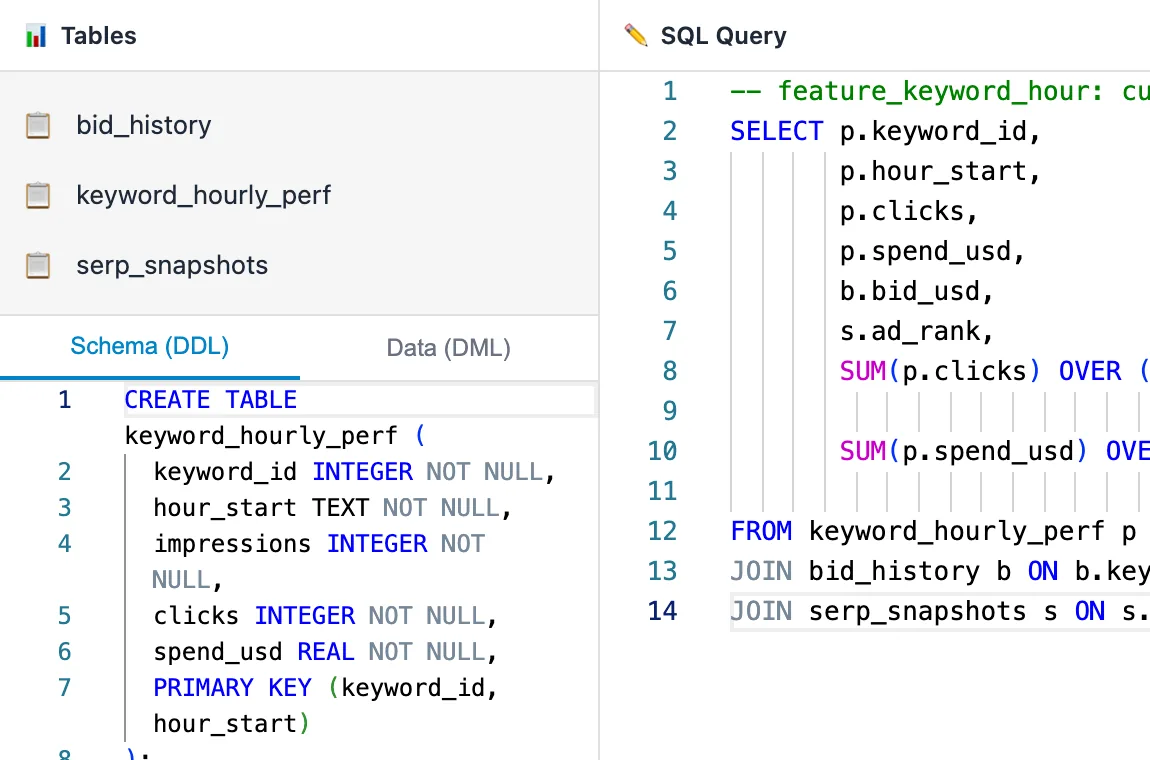
What a strong candidate did: Found the join that multiplied spend, fixed the query so totals tie to billing, and told the data scientist which training days were affected.
Code, then a short note
Gate and deduplicate outbound bid changes
A pipeline pushes bid and budget changes to an ads API every 15 minutes. A rerun pushed the same edits twice, and a broken join once sent zero bids live. The strategist also wants good edits to go through when one bad edit is stopped.
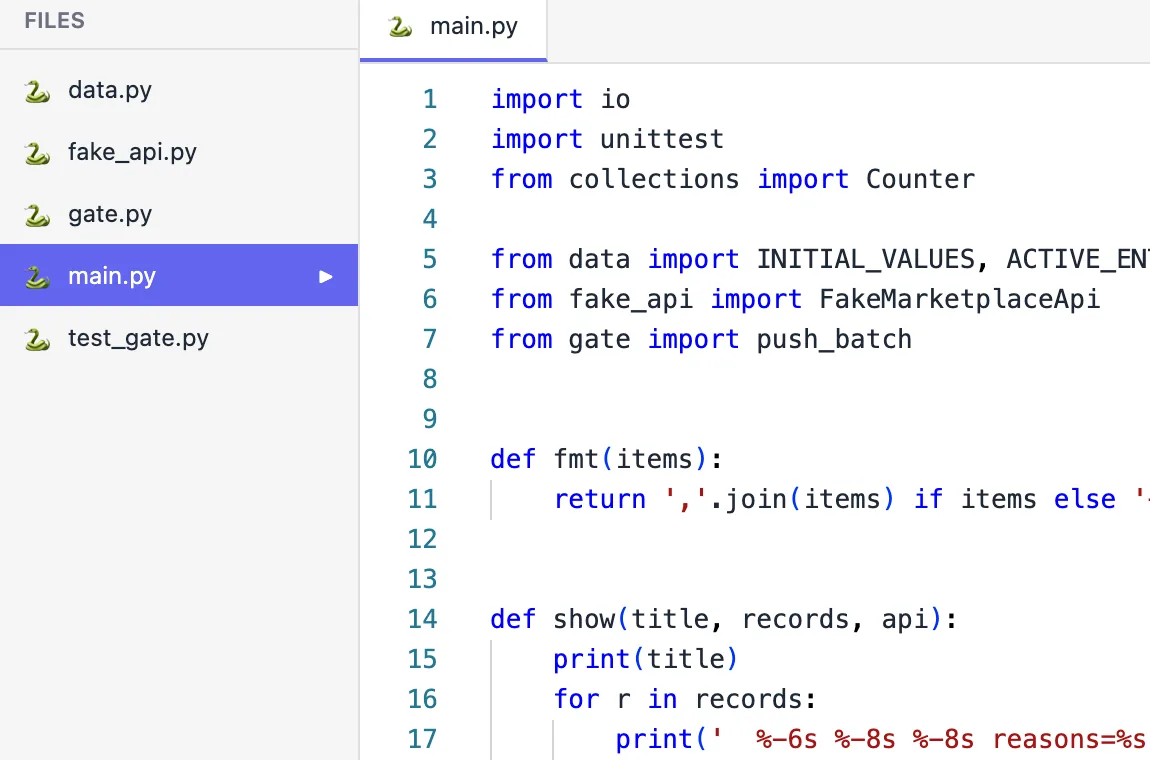
What a strong candidate did: Made each push safe to rerun, stopped bad values one edit at a time instead of the whole batch, and logged what was held and why.
How the decision gets made
In Gateway, each data architect candidate works on situations written from your job description, such as a feature table whose spend totals do not tie to billing or an outbound pipeline that needs gating and deduplication. The candidate investigates in SQL, sketches the corrected design on a whiteboard or in code, and writes the note that engineers and data consumers would act on. The CTO or head of data sees each skill scored with written feedback and opens the work read-only, so senior interview time goes only to architects whose designs fix the real cause.
See your next data architect at work before you meet them
Paste your job description and Gateway writes the assessment in about 5 to 10 minutes. Your team can edit every question before it goes out.
Questions
Can the assessment test architecture rather than only hands-on SQL?
Yes. One assessment can combine a design on a whiteboard, SQL against the data and a written decision, so you see both the direction the candidate sets and whether it holds up in the data.
Will it reflect our platform and our compliance needs?
Gateway writes each assessment from your job description, so the situations follow the platforms, domains and data rules the role names. Your team can read and edit every question before it goes out.
We hire very few architects. Is it worth setting up for one role?
Set-up takes about 5 to 10 minutes from the job description. For a senior hire it mainly saves the time of the senior people who would otherwise interview every shortlisted candidate.
Can several senior people review the same candidate?
Results can be shared with a hiring manager with a note, and anyone reviewing can open the candidate's whiteboard, queries and notes read-only. Your team can change any score and makes the final decision.
Related