Hire a database administrator who owns your data platform end to end
A database administrator owns how the company's data is stored, secured, sized and recovered across every system that holds it, and sets the rules other teams follow when they touch it. Two resumes with the same engines listed can describe very different levels of ownership, so the dependable way to compare candidates is to see how each one reasons through a real platform decision before any interview.
What the hiring manager needs from a database administrator
A head of engineering or infrastructure hiring a database administrator is usually short of someone who looks across the whole estate: which databases exist, who can read what, what it costs, and what happens if a region goes down. That person turns scattered habits into standards the development teams can live with.
An inventory nobody has written down
Over the years teams have created databases for each new service, some managed in the cloud and some on virtual machines. The administrator maps what exists, who owns each one, which hold customer data, and which have no tested recovery plan, and ranks the gaps by risk.
Access that grew without anyone deciding
Developers have production credentials, a reporting tool connects as an owner account, and an auditor is asking who can see personal data. The administrator designs roles with least privilege, moves services to their own accounts, and keeps a record the auditor can follow.
Schema changes from many teams
Several squads ship migrations every week, and one of them locked a large table at midday last month. The administrator sets a review path and a few rules for risky changes without becoming a gate that slows every release.
Capacity and cost for the coming year
Storage keeps growing and the cloud bill for databases is rising faster than traffic. The administrator separates real growth from waste such as unused indexes, oversized instances and data kept far past any retention rule, and proposes changes finance can approve.
Where hiring a database administrator usually goes wrong
- Hiring an operator when you need an owner
- Someone who has run backups and applied patches for years may never have decided anything about the platform as a whole. If the seat needs standards, access policy and capacity plans, test for those decisions, because operational experience alone will not show them.
- Counting engines on the resume
- A list of five database products says little about depth in any of them, or about judgement on when to consolidate. Ask the candidate to choose and defend, and the difference between breadth and ownership becomes clear.
- Leaving security and compliance out of the test
- Data protection questions land on the database administrator sooner or later. A candidate who has never designed roles, encryption or audit trails will learn on your customer data unless the assessment brings it up first.
- Missing whether developers will accept the rules
- Standards that development teams ignore are worth nothing. How the candidate explains a constraint to an engineering lead in writing tells you whether the platform will improve or simply gain a frustrated gatekeeper.
Real tasks from a Gateway assessment
These come from a Gateway assessment for a data engineer, with the employer’s name taken out. Gateway writes every assessment from your own job description, so the tasks your candidates get are built around your role.
SQL, then a short update
Why did model error jump after the overnight run
Error in the latest model metrics is far higher than last week. The data scientist cannot yet say whether the models got worse or the data feeding them did, and the engineering manager needs an answer before the morning.
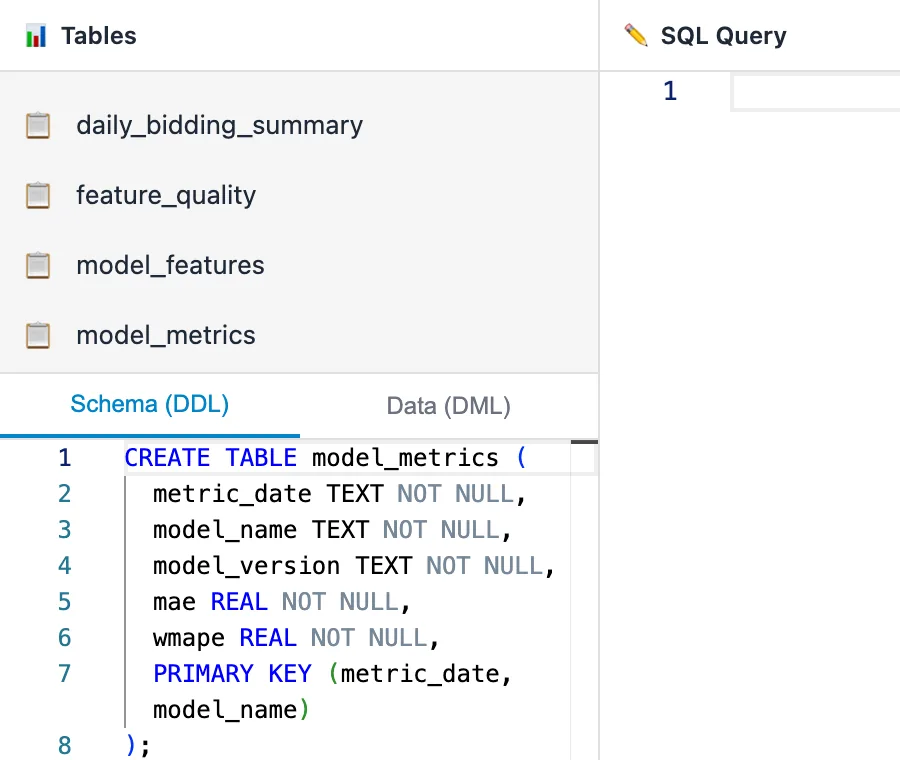
What a strong candidate did: Showed from the data that an upstream feed changed, not the models, pointed to the rows and the time it started, and wrote the update in words the manager could act on.
SQL, then a written note
Inflated spend in a feature table
A strategist summed ad spend from the feature table behind an automated ads optimizer and found it far above the billing report for the same days. A data scientist trains a model on the same table.
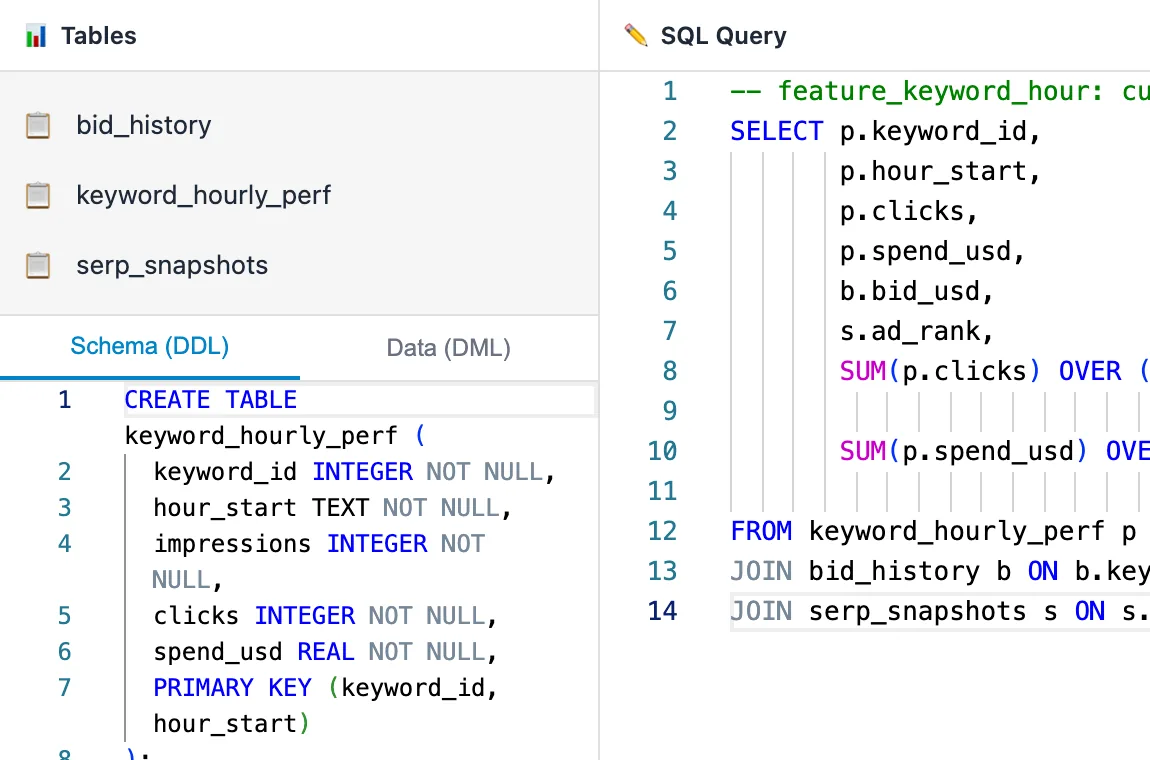
What a strong candidate did: Found the join that multiplied spend, fixed the query so totals tie to billing, and told the data scientist which training days were affected.
Code, then a short note
Gate and deduplicate outbound bid changes
A pipeline pushes bid and budget changes to an ads API every 15 minutes. A rerun pushed the same edits twice, and a broken join once sent zero bids live. The strategist also wants good edits to go through when one bad edit is stopped.
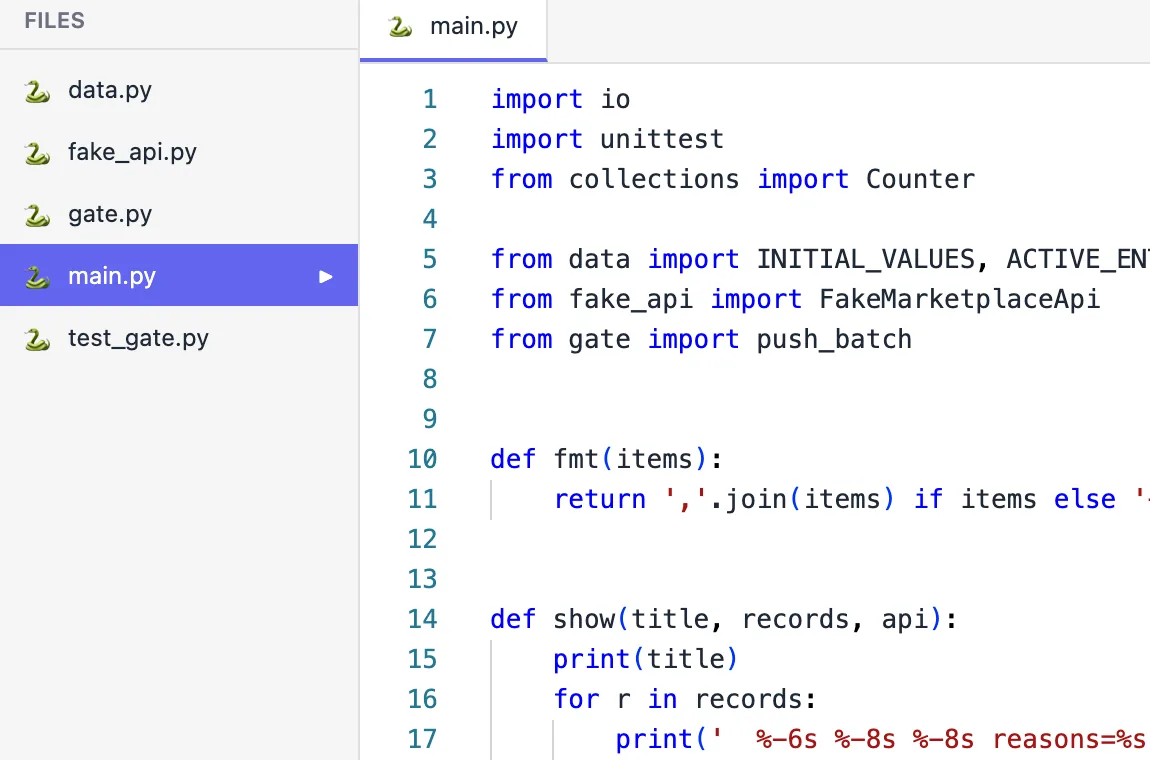
What a strong candidate did: Made each push safe to rerun, stopped bad values one edit at a time instead of the whole batch, and logged what was held and why.
How the decision gets made
In Gateway, database administrator candidates work through situations written from your own job description: a data correctness problem to trace in SQL, a written proposal on access or retention for an engineering lead, a platform design sketched on a whiteboard. The hiring manager reads each skill's score with the reasoning behind it, opens any proposal or query read-only, and meets the people who already think like owners of the estate. For senior hires, panel members can also record questions once as an async video round and vote on the answers before the hiring manager decides.
See your next database administrator at work before you meet them
Paste your job description and Gateway writes the assessment in about 5 to 10 minutes. Your team can edit every question before it goes out.
Questions
Can the assessment reflect our mix of cloud and self-hosted databases?
Gateway writes the situations from your job description in about 5 to 10 minutes, and your team reads and edits every one before candidates see it, so you can name your providers, your engines and the compliance rules you work under.
We need someone senior. Is a work assessment enough on its own?
Use it to see the candidate's decisions first, then add a continuous async video round where your panel records its questions once. Panel members leave votes and notes, and the hiring manager makes the call.
How does the hiring manager review written proposals fairly?
Each skill gets a score and written feedback, the candidate gets a tier from 1 to 5, and you see whether the candidate meets your line. Your team can override any score after reading the work itself.
Can we share results with the head of engineering?
Yes. Results can be shared with a hiring manager along with a note, and every document or query opens read-only exactly as the candidate left it.
What does a candidate need to take part?
A laptop or desktop and the one link you send. Each step explains what it involves before the candidate accepts it, and the link comes with your deadline.
Related