Hire a SQL developer whose queries return the right rows
A SQL developer is valuable when reports, stored procedures and data loads return correct results on real tables and finish in time for the people waiting on them. Almost every applicant claims strong SQL, so the way to compare candidates is to have each one write and fix real queries against realistic data before your team holds a single interview.
What the hiring manager needs from a SQL developer
The team lead hiring a SQL developer usually has a queue of reports, procedures and integrations that someone else wrote and nobody fully trusts. The lead needs a person who writes set-based SQL that is correct first, readable second and fast enough third, and who notices when a result does not make sense.
A report total that is quietly wrong
A monthly report has been slightly off since a new table joined the query. The SQL developer checks the grain of each table, finds the one-to-many join that inflates the sum, and fixes it so the report ties to the source system.
A procedure that runs row by row
An overnight stored procedure loops through records with a cursor and now runs into the working day. The developer rewrites it as set-based statements, keeps the business rules intact, and proves the output matches the old version before switching.
NULLs, dates and duplicates in the source
Incoming data has missing values, mixed time zones and rows sent twice. A careful SQL developer handles each one on purpose, and documents the choice, instead of letting a filter silently drop customers from a count.
A query that was fine until the table grew
A dashboard query that took a moment last year now times out. The developer reads the execution plan, spots the scan or the function wrapped around an indexed column, and fixes the query or proposes the index without breaking other reports.
Where hiring a SQL developer usually goes wrong
- Accepting syntax as proof of skill
- Knowing GROUP BY, window functions and common table expressions is the entry point. The difference shows when a candidate must decide what one row of the result represents, and many people who list SQL never ask that question.
- Testing on a few tidy rows
- A test table with clean keys lets every query look right. Realistic duplicates, NULLs and late records are what separate a developer who checks results from one who stops when the query runs without an error.
- Ignoring performance until production
- A correct query that scans a large table every minute becomes someone else's incident. Ask candidates to say how the query will behave as the data grows, and you learn who reads plans and who guesses.
Real tasks from a Gateway assessment
These come from a Gateway assessment for a data engineer, with the employer’s name taken out. Gateway writes every assessment from your own job description, so the tasks your candidates get are built around your role.
SQL, then a written note
Inflated spend in a feature table
A strategist summed ad spend from the feature table behind an automated ads optimizer and found it far above the billing report for the same days. A data scientist trains a model on the same table.
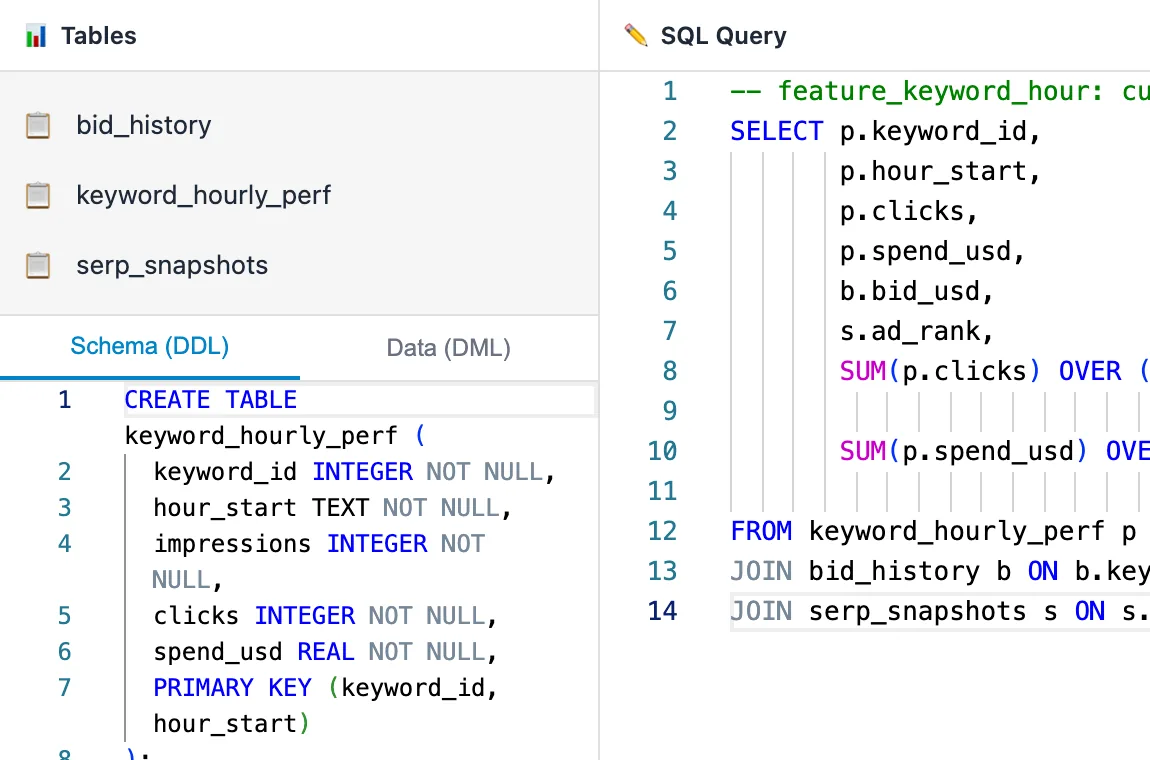
What a strong candidate did: Found the join that multiplied spend, fixed the query so totals tie to billing, and told the data scientist which training days were affected.
Code, then a short note
Gate and deduplicate outbound bid changes
A pipeline pushes bid and budget changes to an ads API every 15 minutes. A rerun pushed the same edits twice, and a broken join once sent zero bids live. The strategist also wants good edits to go through when one bad edit is stopped.
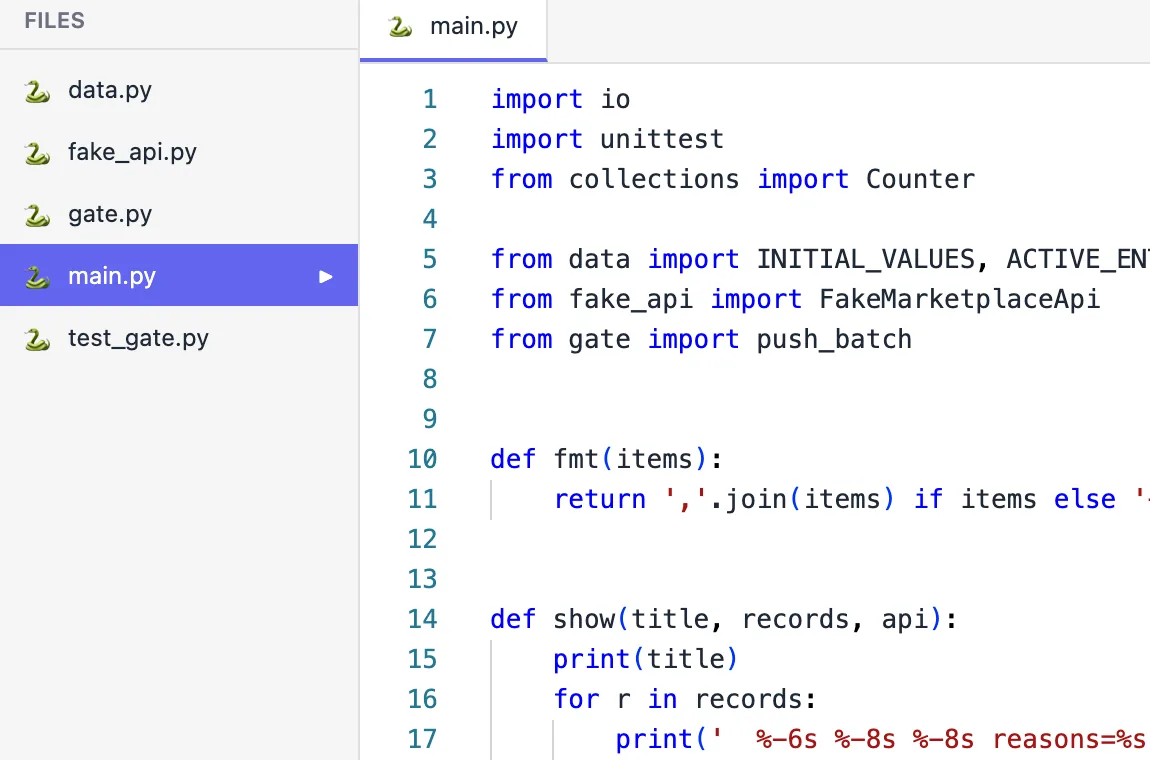
What a strong candidate did: Made each push safe to rerun, stopped bad values one edit at a time instead of the whole batch, and logged what was held and why.
How the decision gets made
With Gateway, SQL developer candidates write and repair queries in a SQL workspace, on situations written from your job description: a total that does not tie out, a slow report, a load that duplicates rows. Each candidate adds a short note on what was wrong and how the fix was checked. The hiring manager sees a score with written feedback for each skill, opens the candidate's SQL read-only, and interviews only those whose results were correct and whose reasoning a teammate could follow.
See your next SQL developer at work before you meet them
Paste your job description and Gateway writes the assessment in about 5 to 10 minutes. Your team can edit every question before it goes out.
Questions
Do candidates run real queries or describe them?
Candidates write and run SQL in the assessment, then explain the result in a written note. You can read the exact queries afterwards in the same workspace, read-only.
Can the data look like ours, for example orders, policies or patients?
Gateway builds each assessment from your job description, so the tables and questions follow your domain. Your team can change any question or its data before inviting anyone.
Is there a multiple-choice SQL section?
No. There is no multiple choice and no question bank that circulates online; every candidate writes queries for the situations your team approved.
We get many applicants for SQL roles. How do we handle volume?
Add candidates from a spreadsheet, an ATS export or resumes. Each receives one link and a deadline, and you see who meets the line you set before anyone schedules a call.
Related