Hire an Oracle developer who can safely change PL/SQL your business runs on
An Oracle developer is hired to change and extend the PL/SQL packages, procedures and queries that billing, finance or core operations depend on, without breaking batch runs or slowing the database. Long Oracle careers can look alike on paper, so the way to compare candidates is to see each one read, fix and tune real Oracle code before your team schedules interviews.
What the hiring manager needs from an Oracle developer
Oracle often holds the systems a business cannot pause: general ledger, policy administration, telecom billing, supply chain. The manager hiring an Oracle developer needs someone who can work inside large, old PL/SQL packages, change them safely and leave them easier for the next person to read.
A month-end batch that now overruns
A PL/SQL job that closes the month runs late and holds up finance. The Oracle developer replaces row-by-row processing with BULK COLLECT and FORALL where it fits, checks the execution plans of the heavy statements, and reads the AWR report to see where time is really spent.
Exceptions that hide real failures
A package catches WHEN OTHERS and carries on, so failed records vanish without a trace. The developer replaces the blanket handler with specific ones, logs what failed and why, and makes sure a partial failure is visible to the people who reconcile the books.
Hard parses from literal values
Application code builds SQL with literals, filling the shared pool and slowing the instance. The developer switches to bind variables, explains the effect on plan stability, and watches for the case where one plan does not fit every value.
Changing a package other systems call
A procedure signature is used by reports, an integration and a nightly feed. The developer checks every dependency, keeps the old signature working through an overload or a wrapper, and plans the release so nothing invalidates during business hours.
Where hiring an Oracle developer usually goes wrong
- Equating Oracle years with PL/SQL quality
- Someone may have spent years in an Oracle shop running reports or supporting forms. Writing maintainable, performant PL/SQL inside a large package is a separate skill, and only real code shows which one you are getting.
- Not testing with legacy code
- Most Oracle roles change existing packages rather than write new ones. A test that asks for a fresh procedure misses whether the candidate can read someone else's code, keep behaviour the same and improve it in small steps.
- Skipping execution plans and statistics
- Oracle performance problems usually come down to a plan, statistics or a missing bind. A candidate who suggests a hint before reading the plan may make one query fast and another one slow.
- Overlooking how changes are explained to finance or operations
- The users of an Oracle system are often accountants and operations staff. A developer who cannot explain in plain words what changed and what to recheck creates extra reconciliation work for the manager.
Real tasks from a Gateway assessment
These come from a Gateway assessment for a data engineer, with the employer’s name taken out. Gateway writes every assessment from your own job description, so the tasks your candidates get are built around your role.
SQL, then a written note
Inflated spend in a feature table
A strategist summed ad spend from the feature table behind an automated ads optimizer and found it far above the billing report for the same days. A data scientist trains a model on the same table.
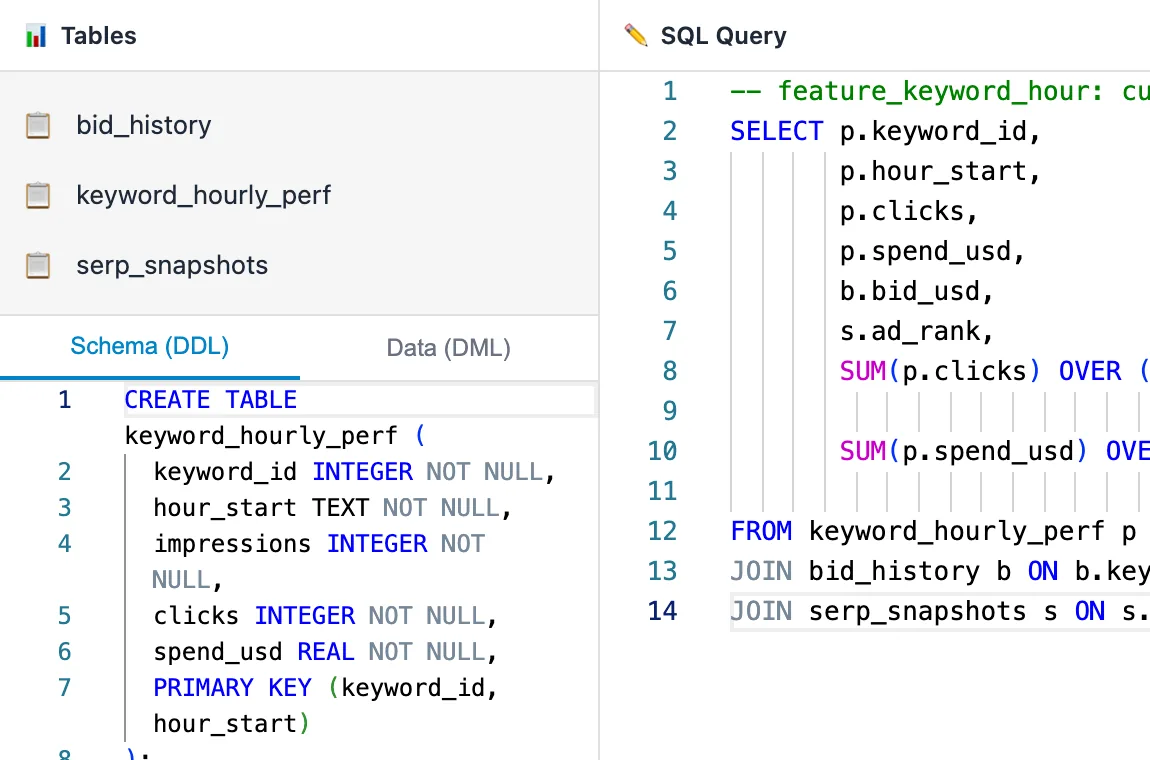
What a strong candidate did: Found the join that multiplied spend, fixed the query so totals tie to billing, and told the data scientist which training days were affected.
Code, then a short note
Gate and deduplicate outbound bid changes
A pipeline pushes bid and budget changes to an ads API every 15 minutes. A rerun pushed the same edits twice, and a broken join once sent zero bids live. The strategist also wants good edits to go through when one bad edit is stopped.
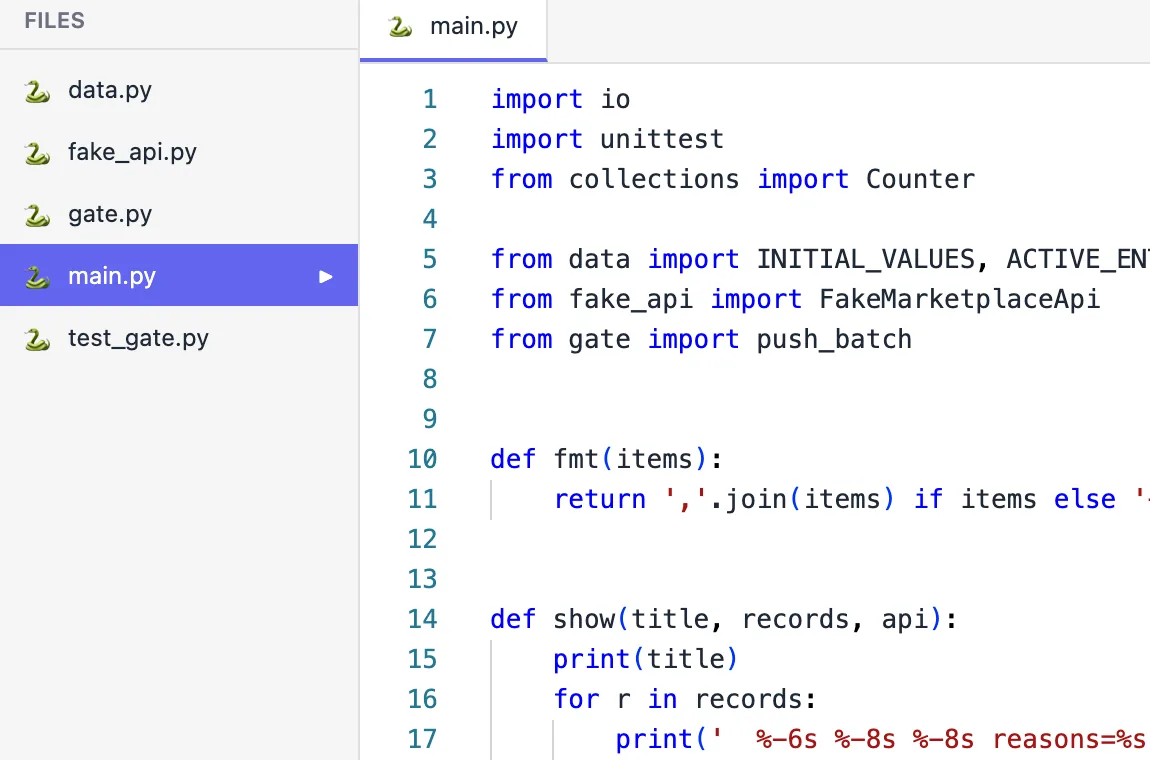
What a strong candidate did: Made each push safe to rerun, stopped bad values one edit at a time instead of the whole batch, and logged what was held and why.
SQL, then a short update
Why did model error jump after the overnight run
Error in the latest model metrics is far higher than last week. The data scientist cannot yet say whether the models got worse or the data feeding them did, and the engineering manager needs an answer before the morning.
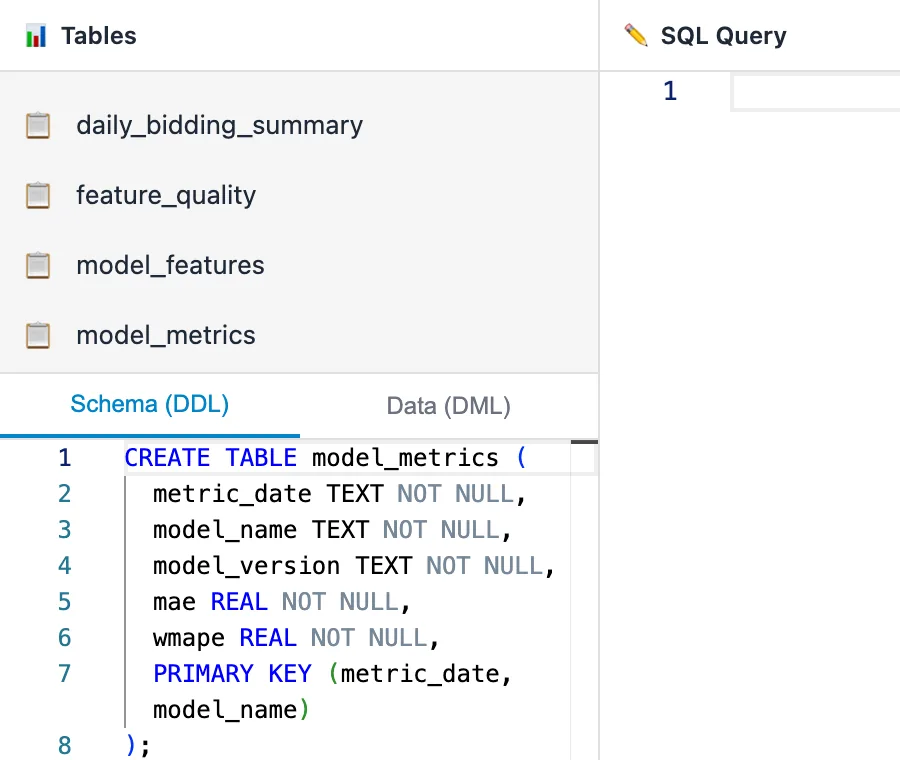
What a strong candidate did: Showed from the data that an upstream feed changed, not the models, pointed to the rows and the time it started, and wrote the update in words the manager could act on.
How the decision gets made
With Gateway, Oracle developer candidates work through situations taken from your job description: a total that does not match billing, a rerunnable push that must handle bad records one at a time, an overnight change that may have broken downstream numbers. They write SQL and code, then a note for the business users affected. The hiring manager sees scores and written feedback per skill, opens each answer read-only, and interviews the developers whose fixes were correct and clearly explained.
See your next Oracle developer at work before you meet them
Paste your job description and Gateway writes the assessment in about 5 to 10 minutes. Your team can edit every question before it goes out.
Questions
Can the assessment include PL/SQL from our own style of packages?
Yes. Gateway drafts the situations from your job description, and your team can paste in a representative piece of code or rewrite any question before candidates see it.
We hire Oracle developers for long-running systems. Can we test reading old code?
Set the situation as a change to existing code. The candidate's edits and explanation open read-only, so your team can judge whether behaviour was kept and the code got clearer.
Is there any multiple choice on Oracle features?
No. Candidates work on the situations your team approved, and nothing comes from a question bank that circulates online.
Can several reviewers score the same candidate?
Anyone on your team with access can read the work and change a score. Results can also be shared with the hiring manager with a note before the final decision.
Related