Hire a business intelligence developer who builds a reporting layer that stays fast and correct
A business intelligence developer builds what sits underneath the reports: the star schemas, the semantic model and its measures, the loads that refresh it and the security that decides who sees which rows. Report-building skills look alike on paper, so the way to tell candidates apart is to see each one trace a real data fault and fix it in SQL or code before your team spends time on interviews.
What the hiring manager needs from a business intelligence developer
The BI or data lead hiring a business intelligence developer usually has reports that people like and a model underneath that is slow, fragile and understood by one person. The lead needs someone who models data properly, keeps measures correct at every level of a report, and makes refreshes finish reliably.
A report that takes too long to open
Users wait on every filter click. The cause is often a model with many-to-many relationships, filters running in both directions and measures that iterate row by row. A strong business intelligence developer reshapes the model into a clean star schema and rewrites the measures, then shows the report returning the same figures faster.
A total that does not equal the sum of its rows
Average order value looks right per region and wrong in the grand total, because the measure averages averages. The developer writes the measure so it is correct at every level of the report, and adds a check that compares it with the source.
Overnight refresh running into working hours
The dataset reloads every table in full each night and is still refreshing when users arrive. The developer moves large tables to incremental refresh, orders the dependencies, and alerts when a refresh fails rather than leaving yesterday's data on screen.
Row-level security for regional managers
Each regional manager must see only that region's customers, and the head of sales must see everything. The developer implements the rules in the model, tests them by viewing as each role, and documents how a new region is added.
Where hiring a business intelligence developer usually goes wrong
- Hiring a report designer for a modelling role
- A candidate with striking dashboards may have built them on flat extracts. The business intelligence developer's job is the model and the loads, and a design portfolio does not show either.
- Relying on years with SSIS or SSRS
- Long experience with one legacy toolset can mean deep skill, or a habit of rebuilding the same full-reload packages. The resume does not say which.
- Testing where the buttons are
- Asking how to create a relationship or publish a report checks familiarity with the tool. It does not check whether the candidate knows when a relationship should not exist.
- Ignoring maintainability
- Hundreds of undocumented measures with similar names turn every change into an investigation. Interviews rarely ask how a candidate names, documents and tests measures, and the next developer inherits the result.
Real tasks from a Gateway assessment
These come from a Gateway assessment for a data engineer, with the employer’s name taken out. Gateway writes every assessment from your own job description, so the tasks your candidates get are built around your role.
SQL, then a short update
Why did model error jump after the overnight run
Error in the latest model metrics is far higher than last week. The data scientist cannot yet say whether the models got worse or the data feeding them did, and the engineering manager needs an answer before the morning.
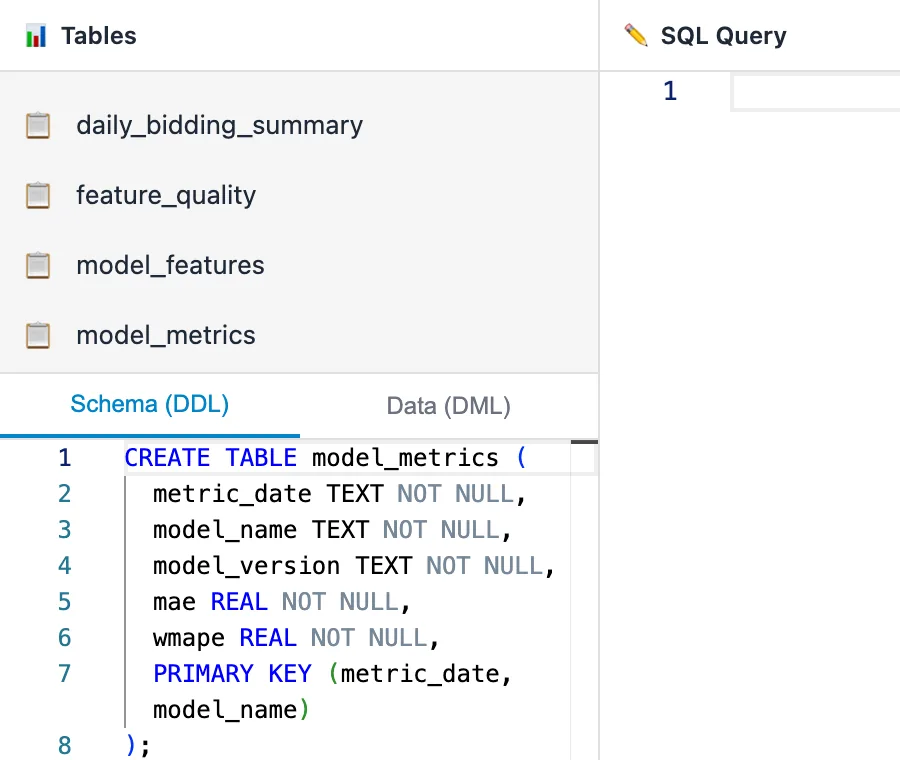
What a strong candidate did: Showed from the data that an upstream feed changed, not the models, pointed to the rows and the time it started, and wrote the update in words the manager could act on.
Code, then a short note
Gate and deduplicate outbound bid changes
A pipeline pushes bid and budget changes to an ads API every 15 minutes. A rerun pushed the same edits twice, and a broken join once sent zero bids live. The strategist also wants good edits to go through when one bad edit is stopped.
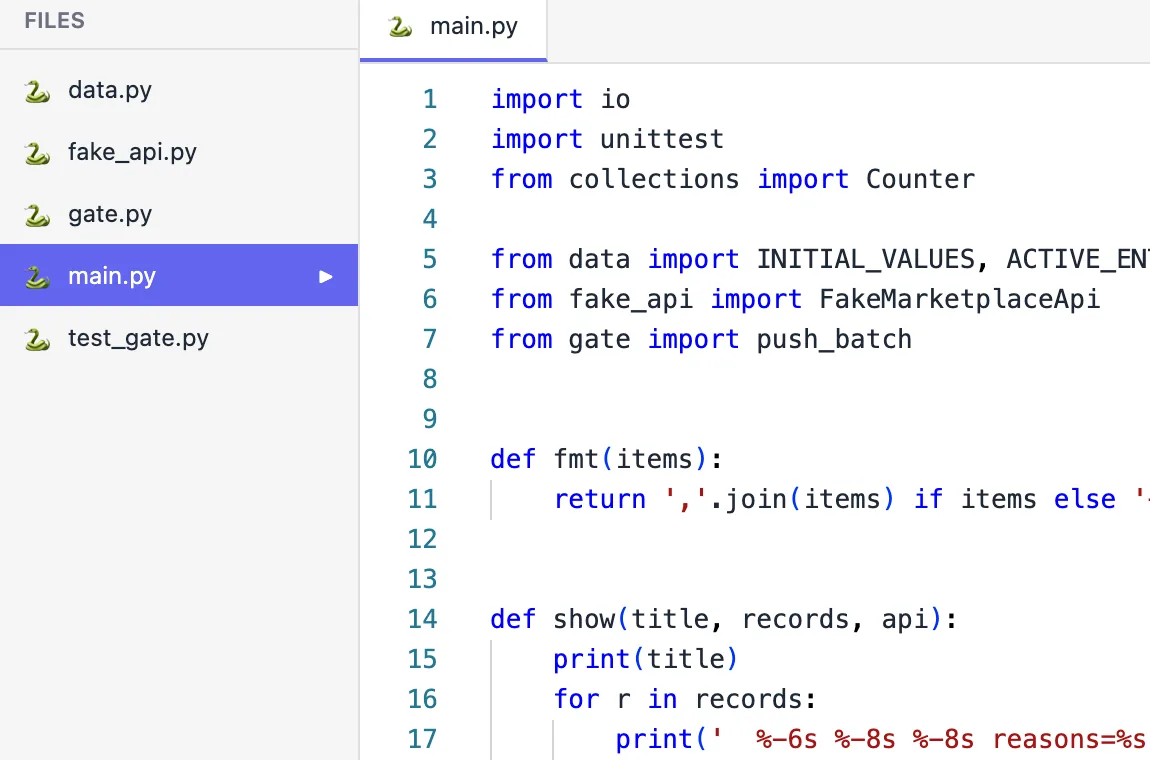
What a strong candidate did: Made each push safe to rerun, stopped bad values one edit at a time instead of the whole batch, and logged what was held and why.
How the decision gets made
In Gateway, each business intelligence developer candidate works on situations written from your job description, such as a model metric that jumped after an overnight load or a scheduled push that must be safe to rerun and must stop bad values one at a time. The candidate works in SQL and code, then writes a short note on what changed and what users should expect. The BI lead sees each skill scored with written feedback, can open the queries and code read-only, and interviews only the developers whose fixes reached the cause.
See your next business intelligence developer at work before you meet them
Paste your job description and Gateway writes the assessment in about 5 to 10 minutes. Your team can edit every question before it goes out.
Questions
How is this different from assessing a business intelligence analyst?
Each assessment is written from its own job description. A developer role built around models, loads and security gets engineering situations in SQL and code, while an analyst role centred on reporting gets reconciliation and KPI questions.
Can the assessment follow our BI tool and warehouse?
Gateway writes the assessment from your job description, so the situations use the tools and data the role names. Your team can read and edit every question before it goes out.
Can we see the candidate's SQL, not only a score?
Yes. Each skill has a score and written feedback, and every query and file opens read-only in the same tool the candidate used. Your team can change any score.
Can candidates use an AI assistant while writing measures and queries?
You decide. An AI-assisted assessment allows an assistant and shows your team how each candidate used it; a standard assessment keeps the work to the candidate.
Related