Hire a machine learning engineer who gets models into production and keeps them there
A machine learning engineer turns a model that works in a notebook into a service the product can depend on: same features in training and serving, predictions within the latency budget, and a safe way back when a new version misbehaves. Framework names repeat on every resume, so the way to separate candidates is to watch each one gate a real model release in code before anyone schedules interviews.
What the hiring manager needs from a machine learning engineer
The engineering or ML lead hiring for this seat already has models, or a data scientist producing them. What the lead lacks is someone who owns the path from a trained artefact to a prediction a customer sees, and who treats a wrong prediction as a production incident rather than a research curiosity.
Predictions that drift from what training promised
The model scored well on last month's data, but live scores look different. Often a feature is computed one way in the batch training job and another way in the online service. A strong machine learning engineer compares the two paths row by row and makes them share one definition.
A model on the request path with a latency budget
Ranking or fraud scoring has to answer inside the time the checkout or the feed allows. The engineer measures where time goes, then chooses between a smaller model, cached features, batching or precomputed scores, and knows what accuracy each choice gives up.
A retrained model that is better on average and worse for one segment
The weekly retrain improved the headline metric and quietly hurt new users or one region. The engineer compares the candidate model with the current one by segment and by cost of error before promoting it, and keeps the old version one step away.
A model whose output triggers something expensive
When a score blocks a payment, approves a refund or sends money, a wrong prediction is a loss. The engineer you want puts thresholds, fallbacks and a human approval step around the actions that cannot be undone, and tests each path.
Where hiring a machine learning engineer usually goes wrong
- Hiring a researcher for a shipping seat
- Papers and novel architectures are valuable on a research team. A product team that needs reliable inference, versioned models and clean rollbacks often finds that a strong publication record came with little experience of on-call or release discipline.
- Screening on TensorFlow, PyTorch and scikit-learn
- The framework list says which libraries a candidate has imported. It does not show whether the candidate would notice training-serving skew, or would ship a model with no way to roll it back.
- Interviews that stop at model accuracy
- Many ML interviews ask how to improve a score and never ask what happens when the model is wrong in production. That is the question the engineering lead will face in the first incident review.
- Generic coding rounds
- A candidate can pass an algorithm round and still write feature code that differs between training and serving. The skill that matters is engineering around a model, and a puzzle does not exercise it.
Real tasks from a Gateway assessment
These come from a Gateway assessment for an AI engineer, with the employer’s name taken out. Gateway writes every assessment from your own job description, so the tasks your candidates get are built around your role.
Code, then a short note
Release gate for irreversible payments
A payment agent proposes three kinds of action in SAP, including releasing wires that cannot be recalled once a bank accepts them. Treasury carries any loss.
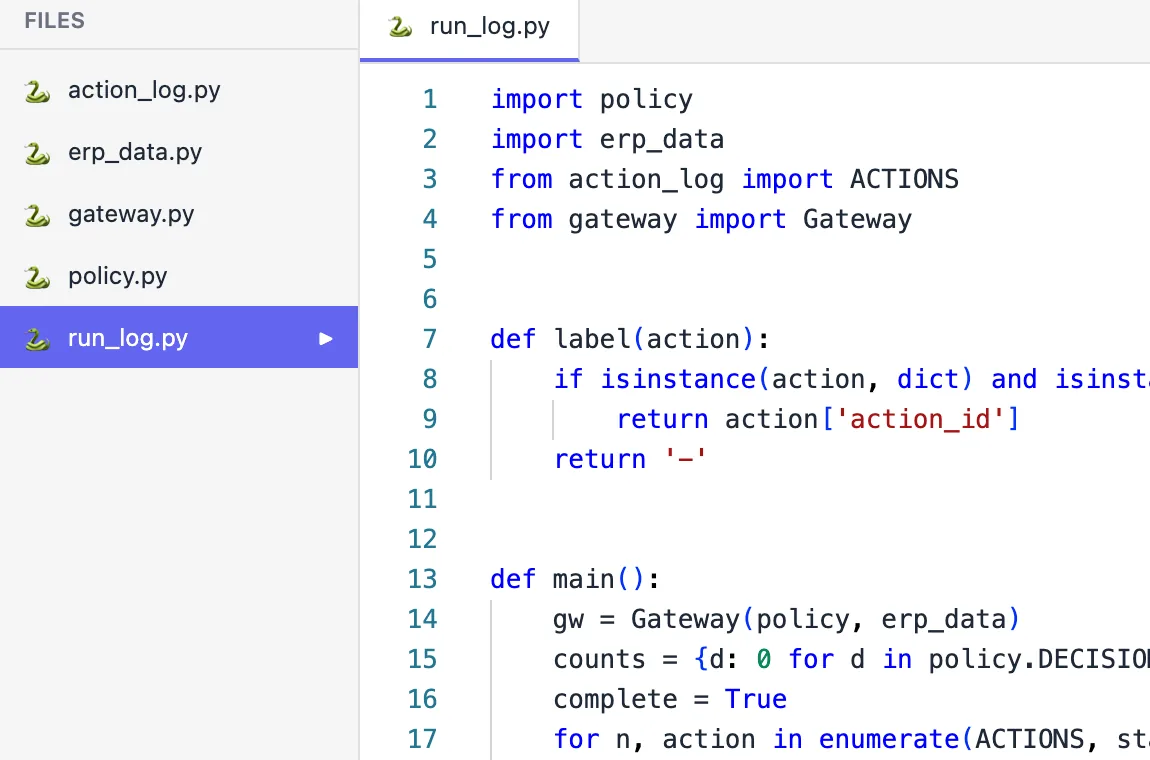
What a strong candidate did: Built a gate that lets low-risk actions through and stops anything irreversible without a person’s approval on record, with tests for each action type.
SQL on the evaluation results, then a written decision
Release gate for an invoice-extraction prompt change
An invoice agent reads supplier invoices and posts them to SAP, or sends them to a person when it cannot post safely. The evals lead needs a ship-or-hold decision on a rewritten extraction prompt.
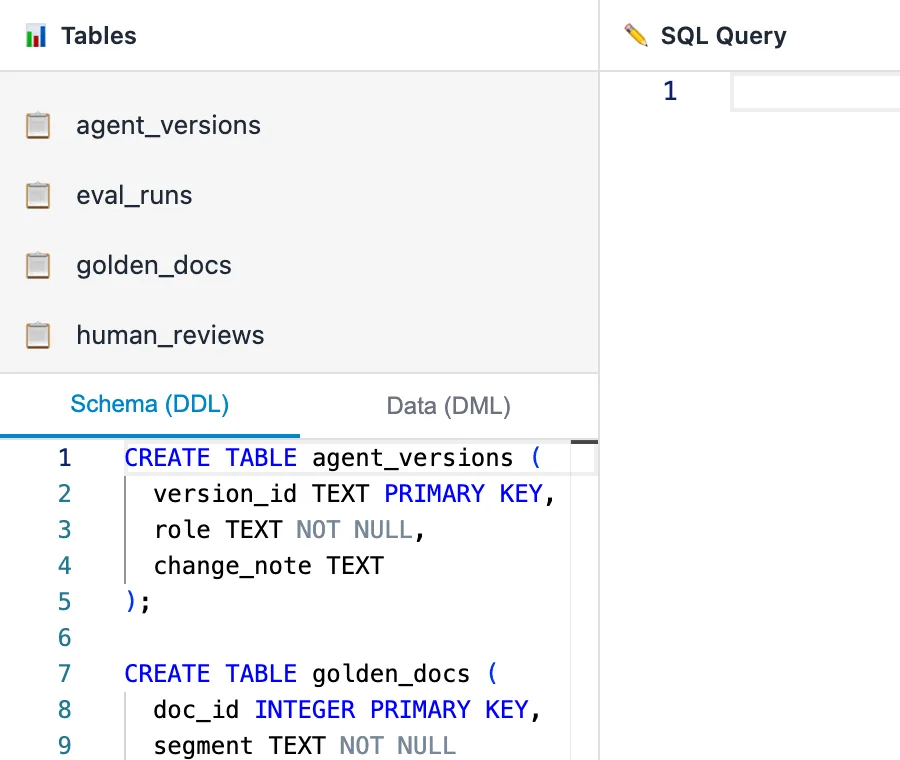
What a strong candidate did: Compared the new prompt with the current one where mistakes cost money, not just on overall accuracy, held the release on a specific failure, and named what would have to change to ship it.
How the decision gets made
In Gateway, each machine learning engineer candidate works through situations written from your job description, such as building a release gate for model-driven actions or comparing a new model with the current one on evaluation results. The work happens in code and SQL, followed by a short written note on what ships and what is held. The hiring lead sees a score with written feedback for each skill and can open the candidate's code read-only, then spends interview time only with engineers whose releases would have been safe.
See your next machine learning engineer at work before you meet them
Paste your job description and Gateway writes the assessment in about 5 to 10 minutes. Your team can edit every question before it goes out.
Questions
Can the assessment follow our serving stack and the kind of model we run?
Gateway writes the assessment from your job description, so the situations follow the models, data and constraints the role describes. Your team can edit every question before sending it.
How is a machine learning engineer assessment different from a data scientist one?
The situations differ because the role differs. A machine learning engineer gets production problems such as release gates, rollbacks and serving constraints, written from a job description that asks for them, rather than experiment design or metric choice.
Can our ML lead see the code, or only a score?
Both. Each skill has a score and written feedback, and the candidate's code opens read-only in the same editor the candidate used. Your team can change any score.
Do candidates need special hardware?
Candidates need a laptop or desktop and one link. Each step says what it involves before the candidate accepts it.
Related