Hire a Neo4j developer who models relationships your product can query fast
A Neo4j developer is hired to turn connected data, such as accounts, devices, transactions or products, into a graph model whose Cypher queries answer real questions quickly and correctly. Graph experience is hard to judge from a resume, so the way to compare candidates is to see each one model and query a real problem before your team spends time on interviews.
What the hiring manager needs from a Neo4j developer
Companies bring in a Neo4j developer when the questions they ask are about connections: which accounts share a device, which parts depend on a failing supplier, what a customer is likely to want next. The lead needs someone who decides what becomes a node, what becomes a relationship and what stays a property, and who writes Cypher that stays fast as the graph grows.
Finding rings of linked accounts
The fraud team suspects groups of accounts share phone numbers, cards and addresses. The Neo4j developer models those shared identifiers as nodes, writes a bounded variable-length match to find connected groups, and returns results an analyst can review.
A supernode that slows every traversal
One popular category or a shared default address is connected to a huge share of the graph, and queries that pass through it crawl. The developer spots the supernode, changes the model or filters early, and checks the query profile to confirm the fix.
Loading data from relational systems
Customer, order and product data lives in a relational database and must be loaded nightly into the graph. The developer writes idempotent loads with MERGE on indexed keys, so a rerun does not create duplicate nodes or relationships.
A recommendation query product can trust
Product wants related items based on what similar customers bought. The developer writes the Cypher, explains why each recommendation appears, and limits the depth so the query responds quickly enough for a page load.
Where hiring a Neo4j developer usually goes wrong
- Hiring a SQL developer and hoping the graph will follow
- Modelling tables and modelling a graph call for different instincts. A candidate who turns every join table into a node, or every relationship into a property, will build a graph that is slow and awkward to query.
- Testing Cypher syntax without a model
- Anyone can learn MATCH and RETURN quickly. What matters is whether the candidate chooses the model that makes the important query simple, which a syntax quiz never asks.
- Ignoring unbounded traversals
- A pattern with no depth limit can touch most of the graph. Candidates who do not think about bounds, indexes on starting nodes or query profiles create the slow pages that end up on the lead's desk.
Real tasks from a Gateway assessment
These come from a Gateway assessment for a data engineer, with the employer’s name taken out. Gateway writes every assessment from your own job description, so the tasks your candidates get are built around your role.
SQL, then a short update
Why did model error jump after the overnight run
Error in the latest model metrics is far higher than last week. The data scientist cannot yet say whether the models got worse or the data feeding them did, and the engineering manager needs an answer before the morning.
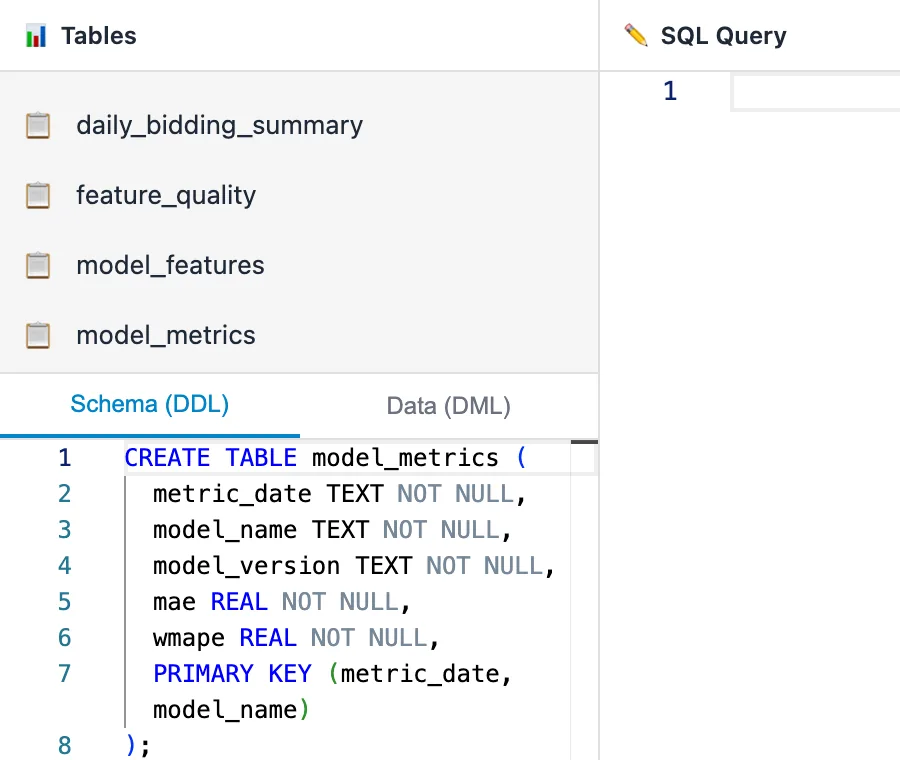
What a strong candidate did: Showed from the data that an upstream feed changed, not the models, pointed to the rows and the time it started, and wrote the update in words the manager could act on.
Code, then a short note
Gate and deduplicate outbound bid changes
A pipeline pushes bid and budget changes to an ads API every 15 minutes. A rerun pushed the same edits twice, and a broken join once sent zero bids live. The strategist also wants good edits to go through when one bad edit is stopped.
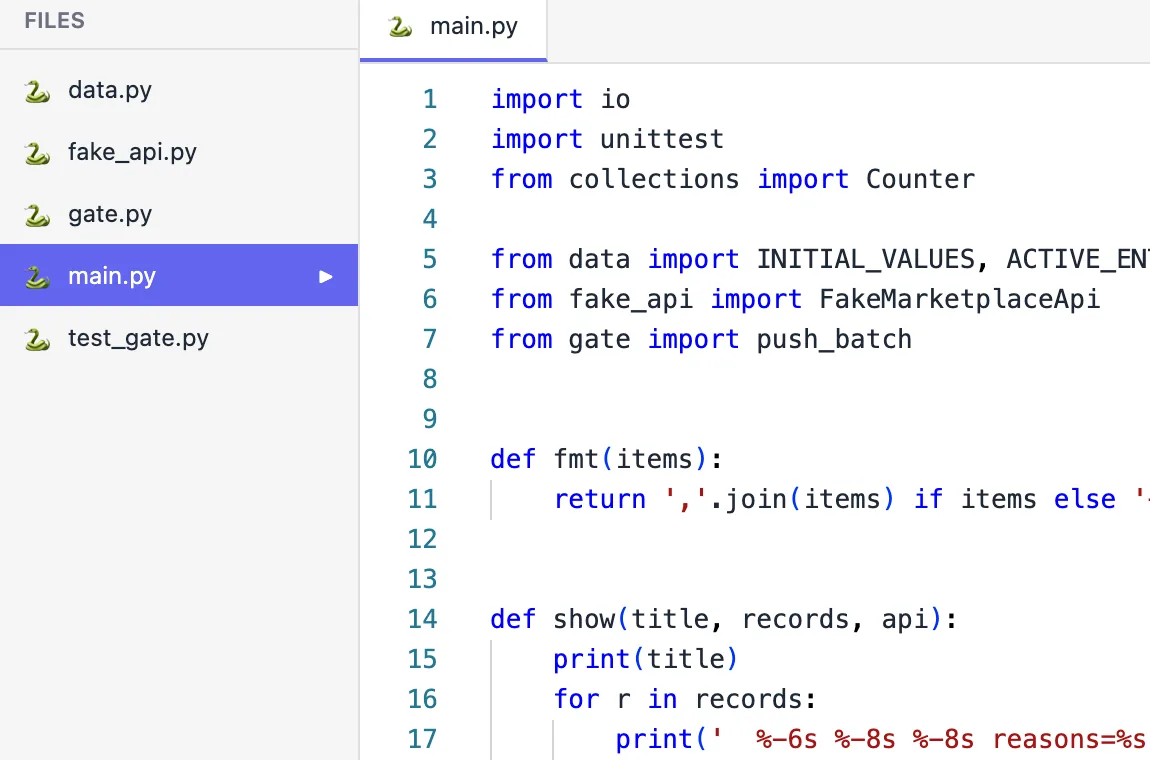
What a strong candidate did: Made each push safe to rerun, stopped bad values one edit at a time instead of the whole batch, and logged what was held and why.
How the decision gets made
In Gateway, Neo4j developer candidates work on situations written from your job description: a metric jump to trace back to the data feeding it, a rerunnable load or push that must not duplicate, a graph to model for a new question. They draw the model on a whiteboard, write Cypher and supporting code, and explain choices in a note. The hiring manager sees scores and written feedback per skill, opens the model and queries read-only, and meets only developers whose graph would answer your questions.
See your next Neo4j developer at work before you meet them
Paste your job description and Gateway writes the assessment in about 5 to 10 minutes. Your team can edit every question before it goes out.
Questions
Can candidates write Cypher in the assessment?
Candidates write Cypher and any supporting code in the code step, and draw the graph model on a whiteboard. Your reviewers see both, read-only, with feedback per skill.
Our graph is for fraud, not recommendations. Can the test reflect that?
Yes. Gateway writes the situations from your job description, and your team can edit every one before sending, so the model and queries follow your use case.
What if a candidate's model differs from ours but still works?
Each score comes with written reasons, and your team can change any score after reading the work. A sound alternative design can be credited by your reviewers.
Can we see whether the candidate understood the data or copied a pattern?
The note and the whiteboard show the reasoning behind the query. You can also add a recorded walkthrough where the candidate explains the model in spoken words.
Related