Hire a blockchain developer whose systems stay correct when the chain reorganises
A blockchain developer keeps your product's view of the chain correct: indexers that survive reorganisations, nodes that keep up, and services that never act twice on the same on-chain event. Resumes in this field are full of protocol names and hackathon wins, so the way to tell candidates apart is to watch each one work through a real chain data or infrastructure problem before your team books an interview.
What the hiring manager needs from a blockchain developer
When a company asks for a blockchain developer, it usually means infrastructure rather than contracts: someone who runs or talks to nodes, reads chain data into the company's own databases, and builds the services that move value between the chain and the rest of the product. The engineering lead needs that layer to be dull and correct, because every error in it surfaces as a wrong balance in front of a user.
An indexer that disagrees with the block explorer
After a short chain reorganisation, your database still holds events from blocks that no longer exist, and a few users see deposits that never settled. A capable blockchain developer designs the indexer to track finality, roll back orphaned blocks and replay from a safe point, instead of patching rows by hand.
Nodes or RPC providers falling behind
Your own node lags during a busy period, or a hosted RPC endpoint starts rate limiting and returning stale heads. The developer you hire should notice it from block height drift, fail over without losing events, and alert on it before support tickets do the alerting.
A relayer that must act exactly once
A bridge, payout or settlement service watches for an on-chain event and then does something off-chain, or the reverse. Retries, restarts and duplicate logs are routine, and a weak design pays someone twice or never pays at all.
Choosing where to build
Product wants to launch on a new chain or a layer two network. The developer weighs finality time, fees, tooling and node availability for your use case and writes it down so leadership can decide, rather than picking the chain the developer finds most interesting.
Where hiring a blockchain developer usually goes wrong
- Hiring on protocol names and token projects
- A resume listing several chains, a DAO and a token launch shows exposure. It does not show whether the candidate has ever cleaned up after a reorg in a production database, and that second skill is what keeps your balances right.
- Testing contract trivia for an infrastructure role
- Many interview loops for this title ask about Solidity gotchas because that is what the interviewer knows to ask. The person you need may never write a contract; event processing, idempotency and node operations are the actual work.
- Algorithm puzzles in place of distributed state
- Balancing a tree says little about how someone reasons when two nodes report different chain heads. The job is mostly state that changes underneath you, and the evaluation should look like that.
- Never asking how keys are handled
- Infrastructure developers often touch signing keys for relayers or hot wallets. A candidate who is casual about where a private key lives is a risk that protocol knowledge does not offset, and a standard coding round never brings it up.
Real tasks from a Gateway assessment
These come from a Gateway assessment for a backend engineer, with the employer’s name taken out. Gateway writes every assessment from your own job description, so the tasks your candidates get are built around your role.
A design on a whiteboard, then a written note
Nightly job ingestion from a partner scheduling API
Each night the product pulls changed jobs from a partner scheduling platform into PostgreSQL. At 06:00 a dispatch agent builds every business’s day plan from them, and dispatch teams start at 06:30. Jobs have been missing and duplicated.
What a strong candidate did: Designed an ingest that resumes from where it stopped, updates rather than duplicates, and finishes well before 06:00 with an alert if it will not. Named the one case that still needs a person to look.
SQL, then a written note
Stale answers from the support assistant’s knowledge base
An AI support assistant answers from help articles that a nightly job splits, embeds and stores. Customers are getting answers from articles that were changed or removed weeks ago.
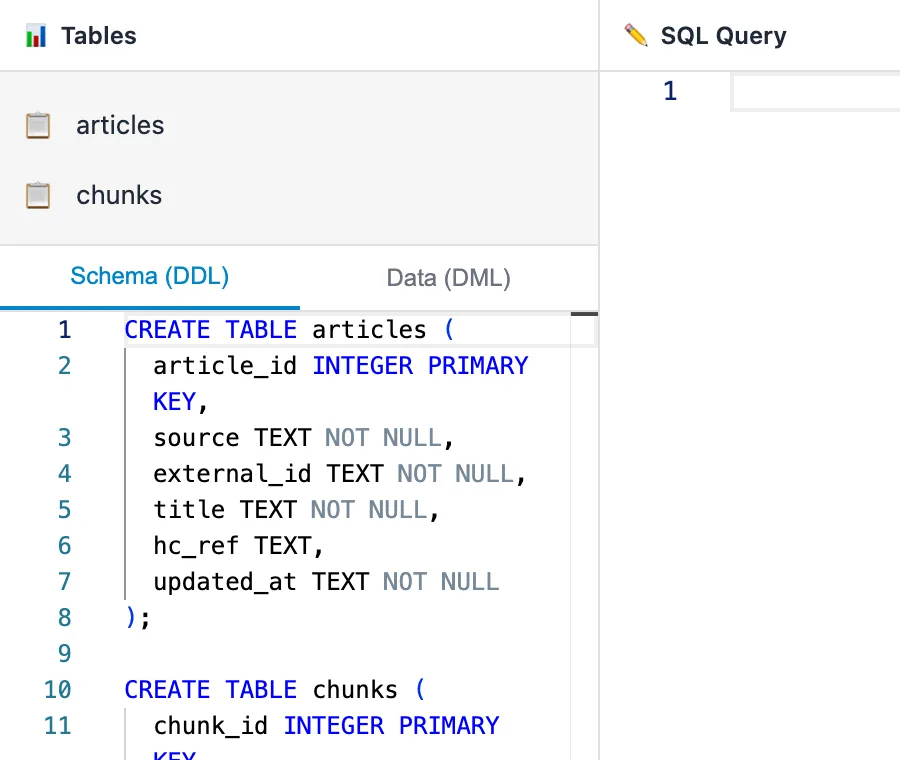
What a strong candidate did: Found in the data which articles were stale and why the refresh skipped them, sized how many answers were affected, and proposed a refresh that removes deleted articles as well as adding new ones.
How the decision gets made
With Gateway, each blockchain developer candidate works through situations written from your job description, such as an ingest that must resume where it stopped or chain-derived data that has gone stale, in code, on a whiteboard for the design, and in SQL against the data it produced. Your engineering lead sees a score and written feedback for each skill, can open every line of the candidate's work read-only, and invites only the people whose systems would hold up on mainnet. The technical round then goes into trade-offs the candidate has already made on paper.
See your next blockchain developer at work before you meet them
Paste your job description and Gateway writes the assessment in about 5 to 10 minutes. Your team can edit every question before it goes out.
Questions
Our stack is on a specific chain. Can the assessment follow it?
Yes. The assessment is written from your job description, so if the role names Ethereum clients, a Cosmos SDK chain or a particular layer two, the situations use them. Your team reads and edits each question before any candidate sees it.
Can we test infrastructure design as well as code?
One assessment can mix formats. A candidate might sketch an ingest pipeline on a whiteboard, write the reorg handling in code, and then say in a short written note which case still needs a person to check.
Is there a fixed question bank candidates could have seen?
No. Every assessment is generated for your role, with no multiple choice and no shared bank of questions circulating online.
What if a candidate's result looks too clean?
Monitoring is off unless you switch it on, with four levels from activity only up to camera on, plus a replay of the test. Gateway never labels anyone a cheat on its own; your team looks at anything unusual and decides.
Who makes the final call on a blockchain hire?
Your team. Gateway places each candidate in a tier from 1 to 5 and shows whether the work meets your line, but any score can be changed and the decision stays with your engineering lead.
Related