Hire an NFT developer who can run a mint that holds up on drop day
An NFT developer builds the mint contract and everything around it: metadata and media storage, allowlists, reveals, and the marketplace listings that follow. The hard parts are drop-day load, bots and metadata that must not change, so the way to choose is to see how each candidate handles a real mint or metadata problem before interviews.
What the hiring manager needs from an NFT developer
Teams hiring an NFT developer today are often games, brands, ticketing or loyalty products using ERC-721 or ERC-1155 tokens, not only art collections. The product owner needs a developer who connects contract, storage and website so a launch goes out on time, holders see the right item, and nobody can mint more than the rules allow.
Drop day traffic and bots
The mint opens and real fans and scripts hit it at once. The developer limits mints per wallet, protects the allowlist with Merkle proofs or signatures, and keeps the site and its RPC calls standing under the load.
Metadata that has to stay put
Images and attributes sit on a server or on IPFS. If hosting lapses or a file is swapped after sale, holders lose what they paid for, so the developer plans pinning, content hashes and who is allowed to change what.
A reveal that must be fair
Items stay hidden until a reveal. The developer makes sure nobody, including the team, can predict or pick rare items beforehand, and can explain the mechanism to a community that will check it.
In-game or loyalty items that change
In a game or loyalty product, items level up, get burned or change hands. The developer decides what lives on-chain and what stays on the game server, and how the two stay in sync when a transaction fails.
Where hiring an NFT developer usually goes wrong
- Hiring on collection hype
- Being part of a well-known collection says the project had marketing. It does not say who wrote the contract or whether the mint worked.
- Ignoring everything off-chain
- Many failed drops had a sound contract and a website, metadata server or indexer that fell over. Interviewing only on Solidity misses most of what goes wrong.
- No question about royalties and marketplaces
- Royalty standards, and how marketplaces honour them, keep changing. Candidates should know what the contract can enforce and what it cannot, instead of promising creators income the code does not guarantee.
- Treating a mint as a one-off
- After launch come transfers, burns, metadata updates and support tickets from holders. A developer hired only to ship the mint often leaves the team with no way to run what came after.
Real tasks from a Gateway assessment
These come from a Gateway assessment for a backend engineer, with the employer’s name taken out. Gateway writes every assessment from your own job description, so the tasks your candidates get are built around your role.
SQL, then a written note
Stale answers from the support assistant’s knowledge base
An AI support assistant answers from help articles that a nightly job splits, embeds and stores. Customers are getting answers from articles that were changed or removed weeks ago.
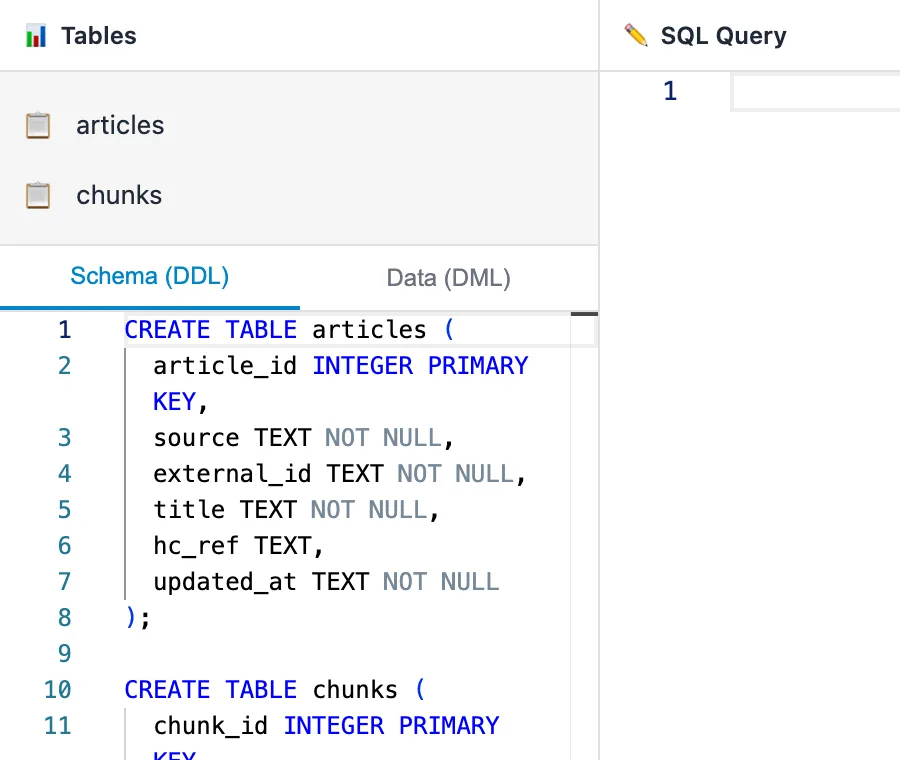
What a strong candidate did: Found in the data which articles were stale and why the refresh skipped them, sized how many answers were affected, and proposed a refresh that removes deleted articles as well as adding new ones.
A design on a whiteboard, then a written note
Nightly job ingestion from a partner scheduling API
Each night the product pulls changed jobs from a partner scheduling platform into PostgreSQL. At 06:00 a dispatch agent builds every business’s day plan from them, and dispatch teams start at 06:30. Jobs have been missing and duplicated.
What a strong candidate did: Designed an ingest that resumes from where it stopped, updates rather than duplicates, and finishes well before 06:00 with an alert if it will not. Named the one case that still needs a person to look.
How the decision gets made
Through Gateway, NFT developer candidates work on situations from your job description, for example a sync job that drops or duplicates records, or stale data that has to be found and corrected, in code, SQL and a short written note. The product owner sees a score and written feedback for each skill, can open the candidate's work read-only, and talks only to developers whose systems would survive launch day and the months after it.
See your next NFT developer at work before you meet them
Paste your job description and Gateway writes the assessment in about 5 to 10 minutes. Your team can edit every question before it goes out.
Questions
Can the assessment reflect our game or brand use case?
Yes. It is generated from your job description, so a ticketing role gets ticketing situations and a game studio gets in-game items. Your team edits any question before candidates receive it.
Can a non-technical product owner understand the results?
Each skill has a written explanation beside its score, and each candidate gets a tier from 1 to 5 and a clear answer on whether the work meets your line. An engineer can open the code for detail.
Can we see whether a candidate used AI?
In an AI-assisted assessment the candidate may use an AI assistant and your team sees how it was used. In a standard one, you can switch on monitoring with a replay; your team, not Gateway, decides whether anything is unusual.
How quickly can we send it before a launch?
Pasting the job description produces an assessment in about 5 to 10 minutes. Review the questions, change what you like, add candidates, and send each one a link with a deadline.
Related